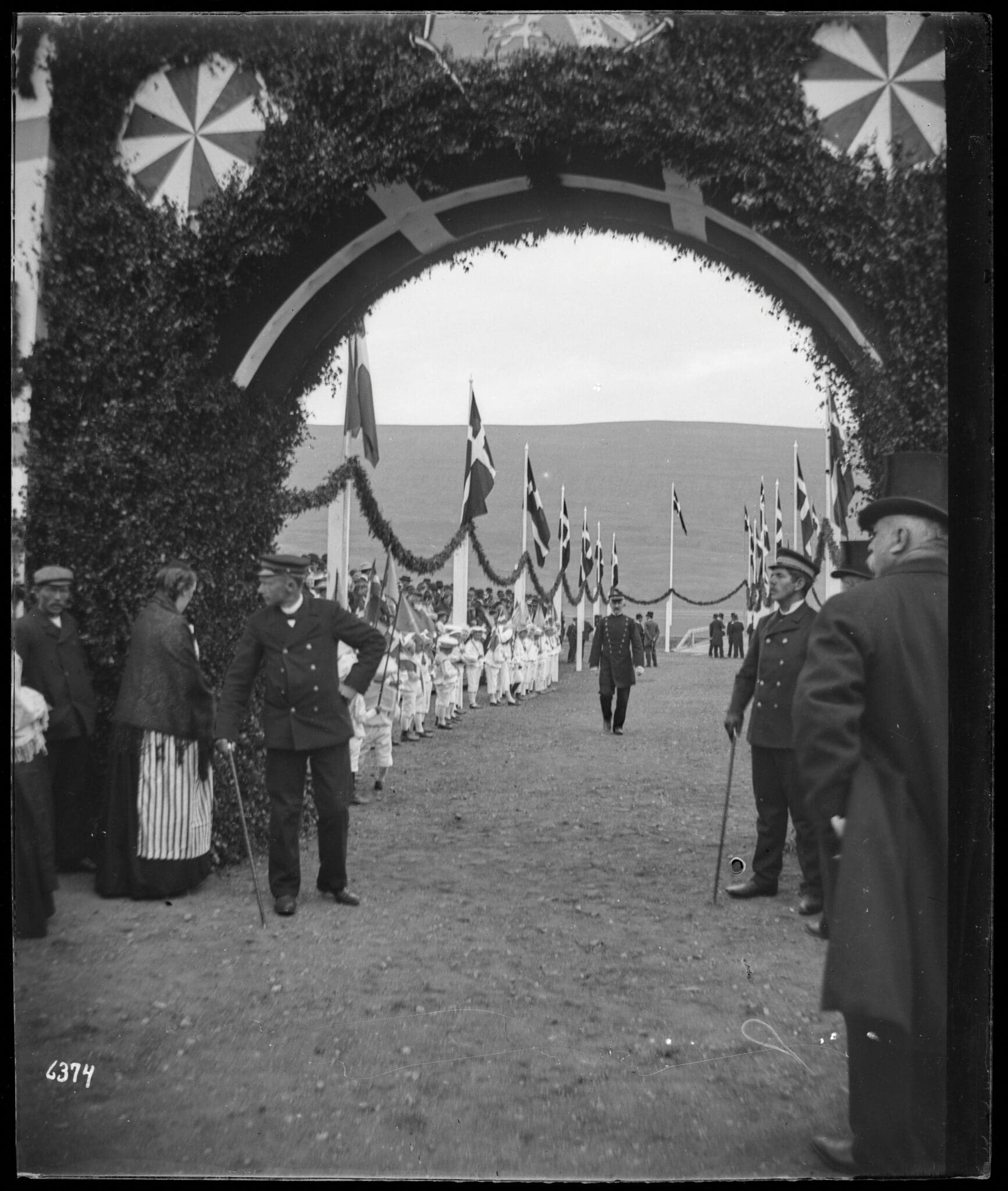
On June 17, 1944, Icelanders terminated the union treaty with Denmark and established a republic at a celebratory parliament session at Thingvellir. The nation was in high spirits, wanting to make the day as festive as possible despite the fact that war was still raging in many parts of the world. Lessons were to be learned from the mistakes of previous celebrations, and in the run-up, it was often pointed out how unfortunate it was not to have good films from the 1930 Althingj hátíð. The National Celebration Committee, which was in charge of organizing the festivities, therefore wanted to commission a film about the establishment of the republic.
However, not everything went as planned with the filming. The filmmakers were faced with complex and difficult situations. Primitive equipment, a lack of funds, and restrictions characterized their work, and a lack of knowledge about soundtracks would later come back to haunt them during the film's post-production. Below, an attempt will be made to shed light on the film's production. Establishment of the Republic of Iceland which Kjartan Ó. Bjarnason and Vigfús Sigurgeirsson were hired to film and was premiered in 1946, two years after the celebrations. The background, planning, execution, and aftermath of the filming of the republic celebration, which took place on June 17 and 18, 1944, at Thingvellir and in Reykjavik, will be examined. An attempt will be made to explain the difficulties in making this first Icelandic sound film and the technical problems that led to the film being rarely shown publicly. The difficult relationship between the national holiday committee and the photographer will also be traced, as will the complex post-production of the film and the negative reception following its premiere.
Preparation
In the run-up to the republican celebration, a special national holiday committee was appointed to handle all the planning. This included making a film about this significant event in the nation's history. The committee was composed exclusively of men, with one member appointed from each parliamentary party, in addition to the chairman. The committee included lawyer Jóhann Hafstein, appointed by the Independence Party, Guðlaugur Rósinkranz, superintendent, from the Progressive Party, Ásgeir Ásgeirsson, Member of Parliament and bank manager, from the People's Party, and Einar Olgeirsson, Member of Parliament, from the Socialist Party, while the chairman was Alexander Jóhannesson, a professor at the University of Iceland.
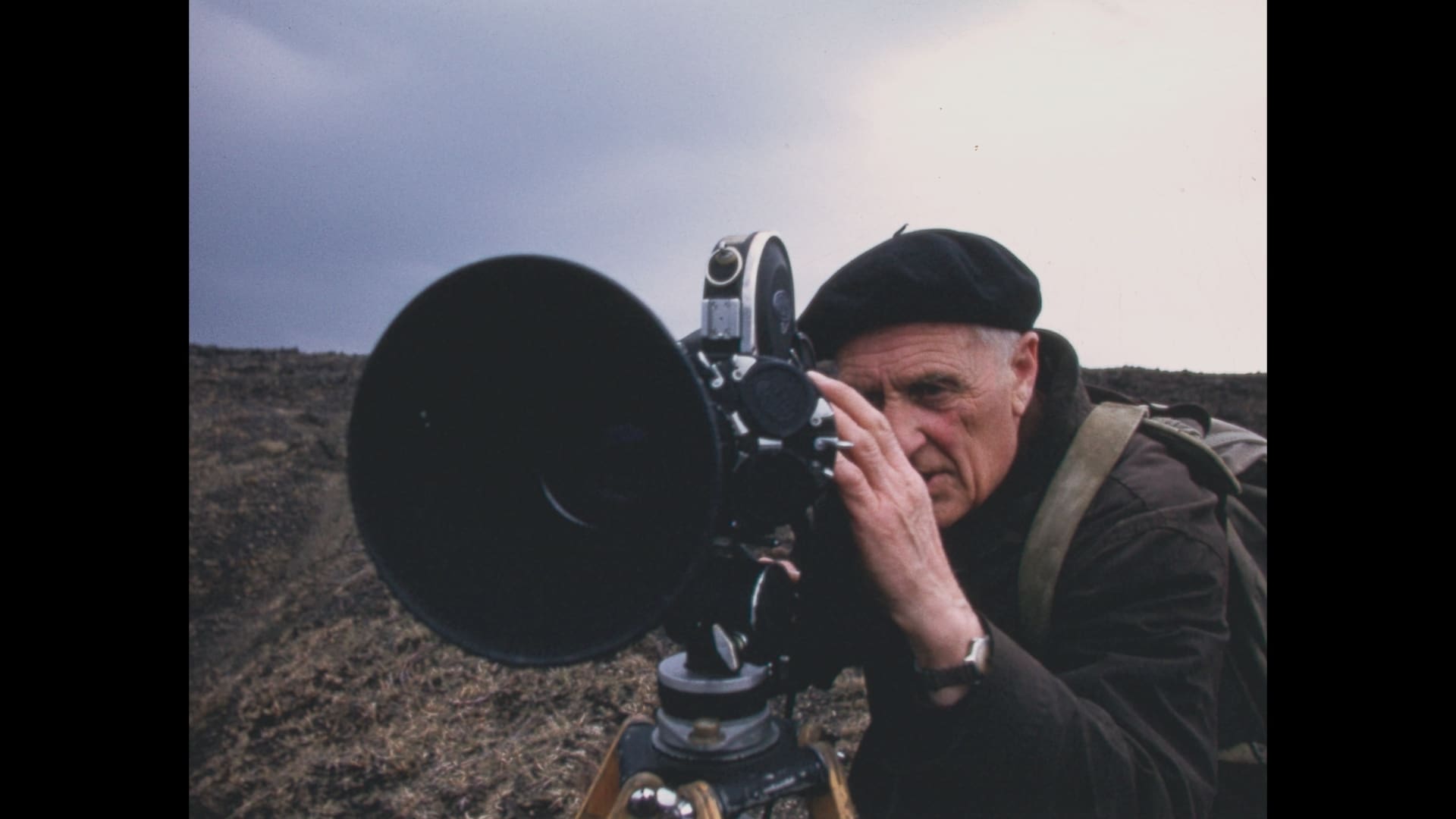
The National Committee for the Celebration of the Republic began holding meetings in early spring 1944, and in March the committee had sent a request to Kjartan Ó. Bjarnason and Vigfús Sigurgeirsson to take on the filming of the republic celebration on 16 mm narrow film. (1) They accepted the offer and hired Edvard, Vigfús's brother, to assist them. Kjartan Ó. Bjarnason was not a trained photographer, unlike most cinematographers at the time. He was a printer and amateur photographer who had considerable experience in photography and filmmaking. Photos by Kjartan had appeared on the covers of magazines, such as Fálkinn and Vikublaðið. (2) Kjartan began filmmaking in 1936 when he filmed an outing of the state printing house, Gutenberg. (3) Kjartan's first public film screenings were of the May Day celebrations in Reykjavík, which he showed at a socialist meeting in 1938. This was likely the first color film taken and shown in the country by an Icelandic filmmaker. (4) Kjartan also made films for organizations and institutions, for example, sports events for the Icelandic Sports Federation (ÍSÍ), Þórsmörk and other forests for the State Forestry Service, the Westman Islands for the Directorate of Education, and the national festival in Hvanneyri for the Icelandic Youth League. Most of the films were in color and had been shown in movie theaters and at entertainment events throughout the country. Therefore, Kjartan's name was by no means unknown in the film industry, and it was not unusual for the national holiday committee to turn to him for filming. Vigfús Sigurgeirsson was a photographer in Reykjavík and had received a government grant in 1936 to study filmmaking in Germany and to purchase a film production machine for the purpose of promoting the country abroad. (5) Vigfús had, among other things, made films for public entities and the Federation of Icelandic Cooperatives (SÍS) and shown his own films widely. Eðvarð Sigurgeirsson was a photographer but also had experience with cinematography in and around Akureyri. Kjartan was to direct the project, despite not being trained, either in filmmaking or photography, unlike Vigfús. It is said that Jón Sen was with them during the filming at Thingvellir, shooting on black and white film, but that footage was mostly destroyed. (6)
Not everyone was in agreement about the hiring of Kjartan, as he was not a professional photographer. In a letter dated June 7, the resolution from a meeting of the Photographers' Association of Iceland was sent to the national holiday committee, warning against hiring Kjartan and against trampling on the protected professional title of photographer in Iceland. (7) Kjartan was not allowed to call himself a photographer or be paid for photographs professionally, but he regularly published photos in newspapers and magazines and had earned a good reputation for a keen eye. He also pursued filmmaking with some vigor, selling both his labor and access to his films.
Photographer Sigurður Guðmundsson wrote to the national holiday committee on June 5, stating that Guðlaugur Rósinkranz had informed him that no filming of the festivities was permitted, other than that which the committee itself was organizing. Therefore, he asks for written confirmation that he is not allowed to handle the filming of the festival celebrations for the Grand Lodge of Iceland. He takes a firm stand on Kjartan's lack of rights in his final words: „If the Festival Committee has any objections to my work or to my rights as a photographer, they are requested to notify me in writing.“ (8) It so happened that the national holiday committee did not ban photography at the festival and issued special badges that members of the Photographic Society of Iceland could wear, thereby gaining unlimited access to the festival grounds. (9) However, the reality was different.
One of Iceland's most experienced filmmakers at the time was Loftur Guðmundsson, who had been making films on the side since 1923 while also running one of the city's most popular photography studios. Loftur intended to make a film about the establishment of the republic and sent a letter to the national holiday committee on May 18, 1944, two months after the committee had hired Kjartan and Vigfús for the project, in which he requested permission to film the republic celebration unhindered with his own equipment. (10) He had contacted them specifically because he had previously been bothered by the police while working at similar celebrations and wanted to avoid that this time. Previously, Loftur had made the committee an offer to film the celebration on wide-screen film, but the committee found it too expensive and rejected the offer. Subsequently, Loftur wrote to the newspapers, criticizing the committee for its decisions and arguing for the superiority of wide-screen film over narrow-screen film, especially for screenings. Loftur considered it a major mistake to shoot the film on narrow film, as only the right equipment was available at Tjarnarbíó to show films on narrow film outside of schools and social organizations. He did, however, point out to the committee that it would be possible to speak with the U.S. Army about filming on 35mm wide film for a lower price than he himself could offer. (11) Loftur was concerned that the filming of the republic celebration would be as good as possible, and according to his letter to the national holiday committee on June 15, just two days before the celebration, he had met with Guðlaug Rósinkranz, who asked him to film the celebration on wide-screen film. Lofti wrote the letter to get written confirmation for this, as such undertakings were costly and done on very short notice. (12) No footage by Lofti of the celebrations at Thingvellir on June 17th exists. However, his footage of the celebration in Reykjavík on June 18 is part of Loft's film *Reykjavík 1944*, which is preserved at the National Film Archive of Iceland. There, a short clip of the celebration in front of the Government House can be seen. (13)
It is worth mentioning Óskar Gíslason's film of the celebrations, which he premiered two days later. Oskar took the photos of the republic celebration all by himself, both at Thingvellir on June 17 and in Reykjavík the next day, developed and assembled them, and they were ready for viewing just two days after the celebration, which was considered a great achievement. (14) It was black and white and silent, but Óskar played records on a gramophone during the screenings. He seems to have, unlike other photographers, obtained special permission to photograph the festival, although he is not mentioned anywhere in the surviving correspondence of the national holiday committee. The reaction to the film was extremely positive, and people were surprised that it was possible to complete a film for screening in such a short time. However, the film was said to show signs of having been rushed and that the filming conditions had not been ideal. (15) Óskar invited the President of Iceland, members of parliament, ministers, and journalists to a special premiere of the film, which became popular and was shown intermittently until November. The film allowed the public to see the festival, as a film by the national holiday committee was still a long way from being released. (16)
The movie
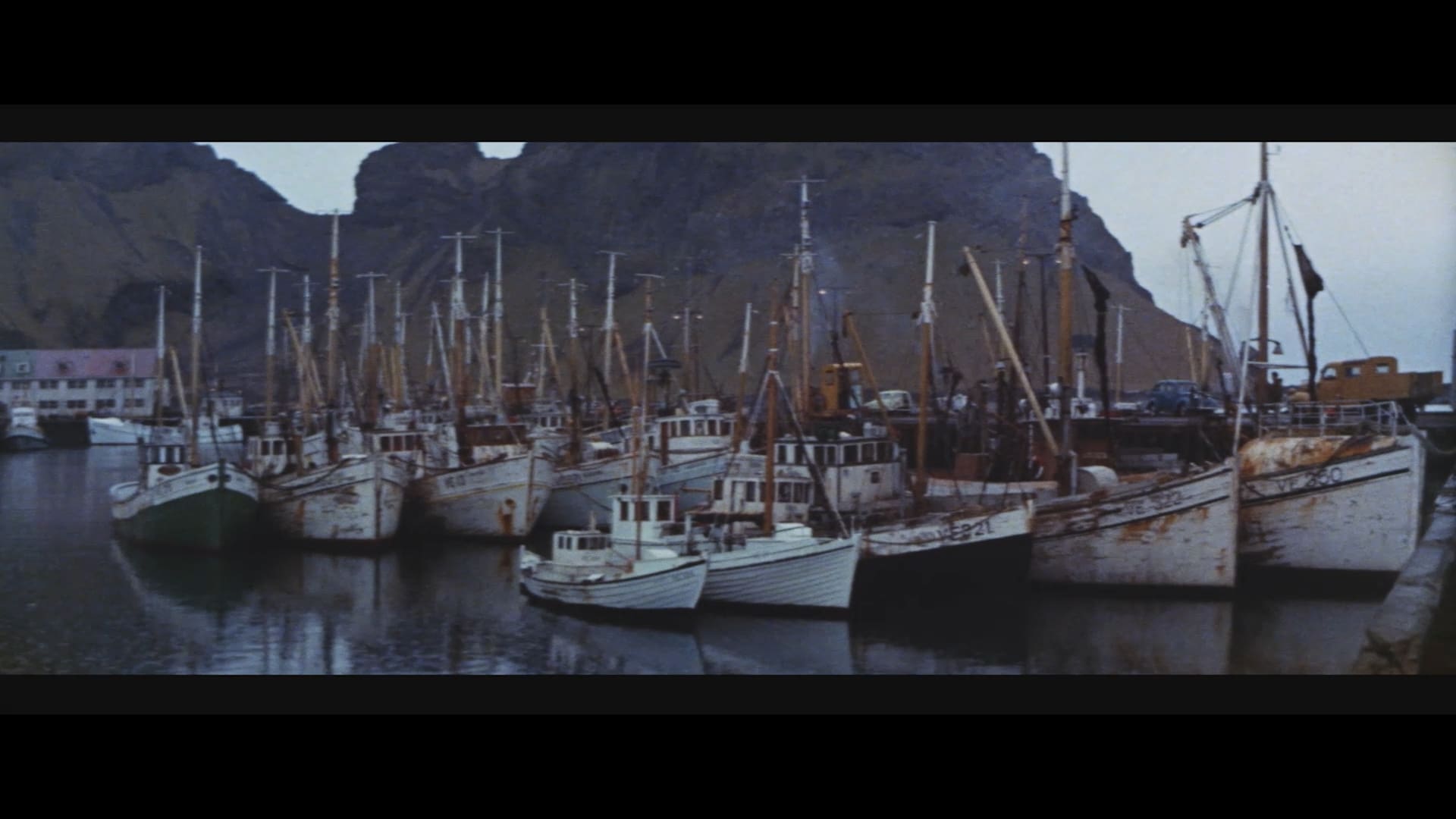
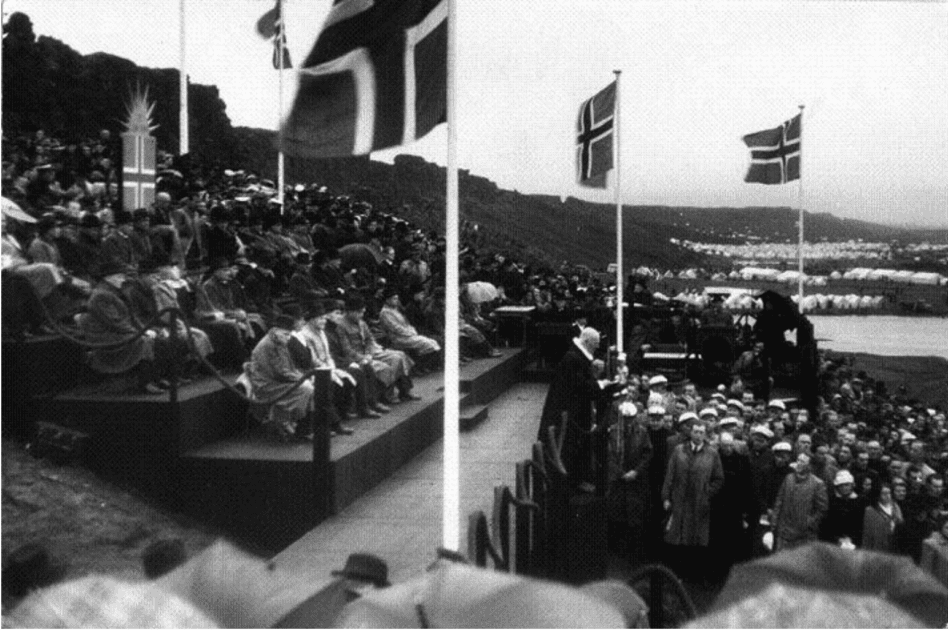
The program for the June 17th celebrations began at Austurvöllur with a wreath-laying at the statue of Jón Sigurðsson. Afterwards, dignitaries proceeded to Thingvellir where a large crowd had gathered, awaiting the establishment of the republic. The weather was extremely bad, with gusty winds and rain, which cast a pall over the day. Special parliamentary stands had been erected at Lögberg, where a parliamentary session was held and the President of Iceland was elected. The next part of the celebrations took place on the fields later in the day with a grand and patriotic program. The next day, June 18, a program was organized in Reykjavík in front of the Government House, and athletes held a competition at Melavöllur. Kjartan's film broadly follows the schedule of the celebrations. It is framed by images of Iceland's nature and people at play and at work. Much of this material was reused from Kjartan's other films, including his film about the Westman Islands. (17) A long section of the film is set inside the Althingi building, where all the members of parliament and ministers are introduced in close-up. Afterwards, the dignitaries lay a wreath at the statue of Jón Sigurðsson in Austurvöllur before heading to Thingvellir.
In the Thingvellir section, what can be called the most difficult part of the film begins, and where its biggest shortcomings can be found. It doesn't take a close look to see that not enough footage was captured of the speeches of those who appear. The Radio Broadcasting recording that fills the film's soundtrack is much longer than the available footage of the speakers. The solution in post-production was to dub footage of speakers at the podium, which becomes unnecessarily obvious because the same shots are used repeatedly and the dubs are extremely blurry. Most of the program segments were filmed, but only short excerpts of each. There are few outtakes from the film, so it is most likely that too little material was shot that day. The material that is in the film is the vast majority of what was shot, and of that, most of the shots are copied and repeated multiple times. The quality of the copies is obviously worse than the original film, with colors faded and the overall appearance grayer and poorer. Such a thing could be excused if there had been a shortage of film, but that was by no means the case.
The most likely explanation for the lack of footage is the filmmakers' inexperience in making a sound film. This refers to Kjartan and Vigfús, and especially the national holiday committee, which was in charge of all the planning for the film's production. There were grand ideas to embed this landmark day in the national consciousness, but when it came down to it, the film was shot without considering the significant space the soundtrack would take up and the amount of footage it would require. The footage is much more like what was typically shot for silent films, with each segment of the program lasting five to ten seconds in length, which would have been well-suited for a silent overview of the program. When it came time to use the footage that had been shot with sound recordings of speeches, it was nowhere near enough. The film is Iceland's first sound film, but a final decision to make a sound film was not made until October 1944, four months after the festival. (18)
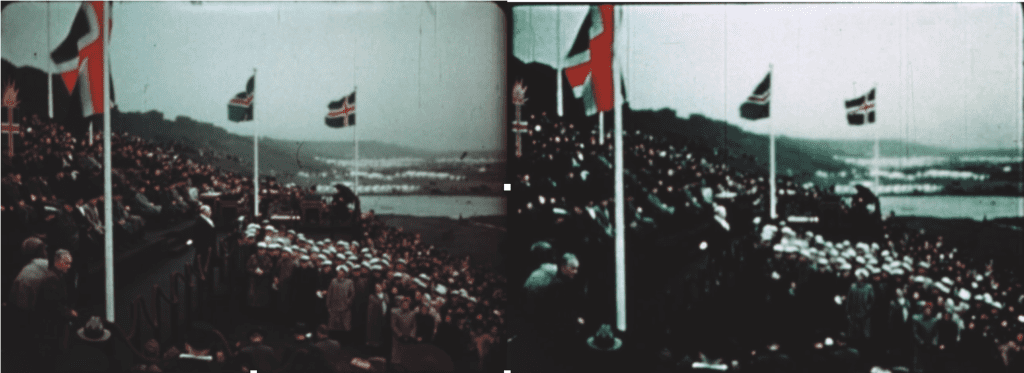
- An example of reusing the same shot where Prime Minister Björn Þórðarson delivers a speech.
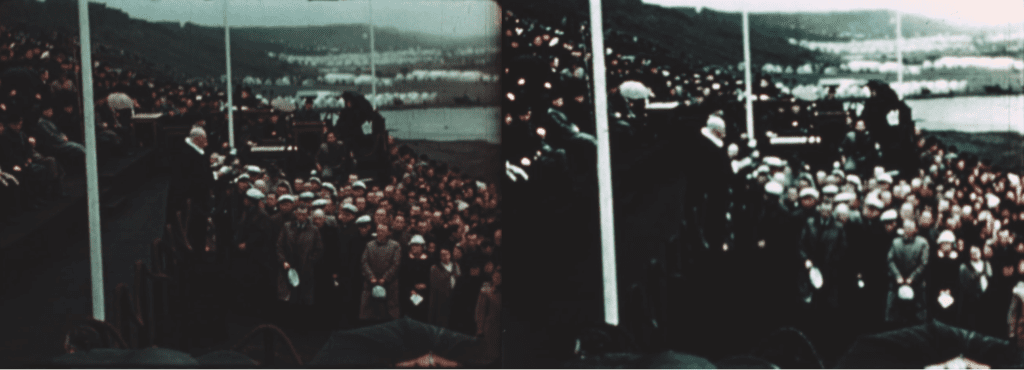
- The Bishop of Iceland, Sigurður Sigurðsson, delivers a speech. The same is happening here; the footage is obviously copied and reused to cover the soundtrack.
Post-production and reception
After filming, the films were sent to the United States for processing through the Embassy of Iceland in Washington. (19) There, they were processed in some haste, as the idea was that foreign news agencies could use the film to report on the establishment of the republic in Iceland, in exchange for the payment that the agency would edit it and the embassy would provide guidance on the script. In a response regarding the film from Thor Thors, the ambassador to the United States, he states that it has been developed but cannot be considered suitable for screening in any setting other than for Icelanders. (20) It was clear that it would be expensive to make the film presentable, sound-track it, and edit it, and that there was no equipment for this in Iceland. The cost of purchasing film and other expenses the embassy in Washington had incurred for the film amounted to just over 14,000 krónur (or about 1.6 million krónur in 2023 prices). There wasn't much money to spare, and the celebration had taken its toll. Therefore, the national holiday committee did little regarding the production of the film until the fall. By then, all the footage had been developed, and it was possible to see what they had.
In a memorandum that Agnar Klemens Jónsson wrote at the Ministry of Foreign Affairs in the fall, he referred to a conversation with the chairman of the national holiday committee, Alexander Jóhannesson, that the committee wanted to make a sound collage with music and narration, framed by landscape images from Iceland, showing the national referendum on the termination of the Treaty of Union and the constitution of the republic, and the republic's celebration. The film was to be about two hours long. Judging by the project description, the national holiday committee had not decided exactly what nature the film would be until after filming. This has created obvious uncertainty during the filming of the movie. (21) The film would need to be post-produced in the United States, where a specialist would handle the production, but Icelanders would have to be sent abroad to direct the work and handle the dubbing. A report sought approval for the financing of such a film, and the minister intended to review the project before a decision was made. The National Holiday Committee subsequently sent a request to the Ministry of Foreign Affairs to complete the film in the United States in cooperation with local experts and to send Kjartan Ó. Bjarnason to oversee the visuals and the overall work, and Páll Ísólfsson to handle the sound and music selection. (22) The proposal for the film was approved in the ministry but was to be financed by the National Celebration Committee. The embassy in the West was also to consider the film's dubbing by finding an Icelandic person residing abroad to do the voice-over. Several men were mentioned in that context in communications between the embassy and the Ministry of Foreign Affairs, but nothing in the correspondence indicates that anyone was hired.
When it came time to depart for the United States, Páll Ísólfsson was unable to go with them, and composer Jón Þórarinsson, who was studying abroad, stepped in to handle the sound and music for the film. (23) Páll would then have selected the music and prepared the narrator's text so that it could be synchronized with the film. An agreement had been made with the company Hartley Productions in New York to complete the film with Kjartan, and the work was supposed to proceed quickly. Kjartan was sent abroad in April 1945, and the film was scheduled to premiere on June 17 of that same year. (24) But the stay in the United States was much longer than planned, and Kjartan did not return to Iceland until December, as it was difficult to finish the film without a script and with a much longer soundtrack than footage.
The National Holiday Committee was responsible for making the film. Establishment of the Republic of Iceland and hired Kjartan, Vigfús, and Eðvarð for the film shoot, but all scriptwriting and other work related to the film was handled by the committee. The script for the film was not ready for filming, and the first vague ideas about the film's structure did not emerge until after the festival. In the fall of 1944, more detailed proposals were put forward about its rough structure. (25) A proper script may never have been created, but Kjartan sent a telegram from the United States in May 1945 asking when it was expected. (26) The problems were not least a result of organizational and inexperience on the part of the National Celebration Committee itself, which did not realize what was needed for filmmaking and did not understand the different characteristics of sound films compared to silent ones.
At the beginning of 1946, the film premiered with pomp and circumstance. The initial reaction was polite praise, but it soon became clear that the film did not live up to expectations. Admittedly, it was the first sound film made in Iceland, which was considered commendable, but that did not serve as an excuse for the filmmakers. The critic for Vísir was dissatisfied with the film, although he praised many beautiful scenes and acknowledged that the weather had been difficult. He pointed out that the sound was terrible and did not match the visuals, that the narrators were never in sync with the soundtrack and would have been a laughingstock if it were not for the fact that it was such a solemn film and Establishment of the Republic of Iceland. (27) The conclusion was as follows:
This attempt at filmmaking is undoubtedly worthwhile, but it is so amateurish that there are no artistic flourishes to be found anywhere, – as can be best seen at first glance, – and can the successors therefore undoubtedly say with full right, that the feathers were not for flying on the plane. (28)
The reviewer for Vísir felt that the film was nothing more than a passing fad, and if it was meant to be preserved for future generations to experience patriotism and pride in their own country, it would fall short. (29) Public opinion was also that the film was lightweight and a disgrace, and people did not understand why help for its production had not been sought abroad. The public was also astonished that certain filmmakers had been given an exclusive to film at the festival. (30)
However, one of the harshest criticisms of the film and its production came from photographers. Earlier, concerns were mentioned that photographers in Iceland had about access to the festivities, but they were eventually told they would receive a badge that was supposed to grant them access to special photography areas. However, this does not seem to have worked as it should. In a letter to Vísir, Sigurður Guðmundsson criticized the film, but primarily the committee's organization, the police's conduct towards photographers, and the hiring of Kjartan as the festival's main photographer. The article was published in two parts on February 26 and 27, 1946, and began with a summary of the festival's importance and the responsibility that comes with documenting such an event for future generations. He then discussed problems with photography at the 1930 Althingi festival, where, due to a misunderstanding, the police prevented photographers from accessing the festival grounds. They were therefore unable to carry out their duties. An attempt had been made to prevent such an incident from recurring, as much was at stake in capturing such an event on film.
In the letter, Sigurður says that photographers had waited to discuss the matter publicly because they wanted to see Kjartan's picture. When it became clear that “this so-called republican holiday photograph by Kjartan Ó. Bjarnason was, in a few words, a disjointed and poorly taken mess of what took place during those two holiday days,„ he decided to report on the matter in the newspapers. (31) He also seems to have gotten wind that it was decided not to offer foreign news agencies footage from it shortly after the festival, and he takes particular issue with this: “It's not even suitable as a newsreel." (32) He lists many technical flaws in the film, including the lighting, editing, sound-picture sync, and frame rate. He also points to many aspects of the National Holiday Committee's planning that could have been improved in the making of the film.
However, two things seem to have hurt Sigurður the most when it comes to the republic celebration. The first is that Kjartan was hired as the „court photographer“ for the national holiday committee without being a trained photographer, and the profession as a whole was shown disrespect with this appointment. The other is that photographers were driven away from the festival grounds by police force and that the agreed-upon area where they were supposed to operate was full of other guests. (33) Sigurður does not hold back his displeasure and says of Kjartan's hiring:
It is certain that the decision of the festival committee to grant an amateur exclusive rights to photograph the nation's most important moments, and to deny professionals the right to carry out a self-appointed duty, is unprecedented among civilized nations. (34)
Sigurður then goes over how photographers were driven away from the area while Kjartan and his men were allowed to work undisturbed, including on a custom-built platform to ensure nothing would disturb them. Even the defense force's cameramen, who were present specifically to film the event, were not allowed to work undisturbed. (35) even though other foreign journalists could not translate the National Holiday Committee's invitation to attend the festivities due to the world war. (36) Sigurður then turns to all the black-and-white film reels that were purchased for the festival, of which no recordings have survived. He says they were destroyed when Kjartan and his assistant attempted to develop the film but were not skilled enough at the task. (37) Sigurður concludes the article by saying that the photographers did not want money or other payment for their work at the republic celebration, but only to be allowed to work in peace, unhindered by the police and the orders and prohibitions of the national holiday committee. Only the committee bore responsibility for the situation and for the outcome of Kjartan's work.
The accusations Sigurður made against the national holiday committee were nothing new, because according to a letter from the committee to the Ministry of Justice and Church Affairs in August 1944, the Reykjavík prosecutor had already received a complaint from photographers.(38) The letter refutes the accusations, stating that while a designated area for photographers had filled up with other guests, they had stepped beyond the boundaries agreed upon with the committee and gone up onto the grandstand. At one point, there were so many of them that some had to be turned away. The National Holiday Committee also states that the conduct of the photographers that day was a disgrace to the profession. (39) In his article, Sigurður states that the outcome was that the then Minister of Justice, Einar Arnórsson, refused to have the matter investigated and dropped it. (40) Photographer Carl Ólafsson also filed a complaint about the police's treatment of him during the celebrations in Reykjavík on June 18, where he was forbidden from entering the festival grounds to do his job. Carl cites a conversation with the Chief of Police in Reykjavik, who stated that he was following strict instructions from the National Holiday Committee and specifically from Guðlaugur Rósinkranz, who had forbidden all photographers, except for those with special permission from the committee, from entering the area. (41) It can be inferred that similar instructions were in place at Thingvellir on June 17. A response to Carl's complaint has not been found despite an extensive search, and there is no indication that any further investigation was conducted.
The national holiday committee's response to Sigurður's writings was published in the name of Guðlaugur Rósinkranz and appeared in Vísir about a month and a half later. In it, Guðlaugur tells a different story of the events. Admittedly, the designated area for photographers had filled up, and like other festival staff, they had to work in cramped conditions, but unlike others, they were prone to complaining about it. It was also appropriate that the police were asked to remove photographers from the grandstands and keep them away, as they would otherwise have become overcrowded. (42) Regarding the hiring of Kjartan and Vigfús, Guðlaugur states that they did not have an exclusive right to photography at the festival; on the contrary, the committee wanted to encourage more photography, which could then be purchased. He also noted that Kjartan and Vigfús both had some experience filming for public entities; Vigfús had made a film for SÍS, and Kjartan for the State Forestry Service, the Icelandic Olympic Committee, and the Educational Affairs Office. Few people in the country could boast similar experience in filmmaking, with the possible exception of Loftur Guðmundsson, but his bid was too high and he only had one camera. The committee felt this was too little for a festival as large as the republic's anniversary celebration, and therefore his bid was rejected. (43) Admittedly, it could be pointed out that Loftur contacted the committee after Kjartan and Vigfús had been hired, and therefore, it is likely that no comparison was made between Loftur and other possible options. Guðlaugur says that five cameramen were working on their behalf that day: Vigfús, Kjartan, and Eðvarð, and according to Sigurður Guðmundsson, Jón Sen was in charge of shooting on black and white film. (44) It is not clear who the fifth cinematographer was, but he was not a photographer, because Guðlaugur says that two of the film's three cinematographers were photographers, referring to Vigfús and Eðvarð. (45)
Gudlaugur says that the majority of Sigurður's account is lies and fabrications, but that one can certainly debate the quality of Kjartan's film. Guðlaugur calls the criticism of the film unfair, saying that reviews were written by people who had not seen it. (46) However, all hope was not yet lost for the film; it could be „easily fixed and perfected“:
It is, of course, essential to make it as true and best a picture as possible of what happened at the remarkable milestone when Iceland became a republic; that is the main point here, not whether this or that photographer was able to get through the crowd at Thingvellir without hindrance. (47)
After Gudlaug's words, little was heard about the matter, but they shed clear light on the lack of organization and experience that characterized the filming of the festivities. The National Holiday Committee was responsible for the planning and the restrictions placed on photographers and film crews. These made it more difficult for everyone to capture the event on film, and as a result, limited footage of the celebration exists. The weather was harsh for everyone at Thingvellir on June 17, especially the filmmakers. However, that does not adequately explain the severe lack of footage from the 1944 republic celebration.
In his concluding remarks to Sigurður, Guðlaugur refers to the need for better treatment of the film, and as early as 1946, there was talk of sending it out for restoration. (48) However, nothing seems to have been done until 1950, when the restoration of the film got underway. Kjartan was hired for the job, but something seemed to be missing from the film's original negative, so he had a master print made from all the available prints, which would serve as a replacement for the original negative and be used for further work on the film. (49) After a hiatus of several years, during which the film was not shown at all, it was to be restored. It turned out that the lab in the United States said the film was too badly damaged to make good copies from and that little could be salvaged. (50) In February 1951, Kjartan had received a commitment from the Ministry of Foreign Affairs that he would receive assistance from the Icelandic embassies in London and Copenhagen to restore *The Establishment of the Republic in Iceland*. (51) The film was to be lengthened and improved as much as possible. Kjartan made a copy of it in London and took it to Copenhagen, where he was on a screening tour with another film about the country. This meant he could give little attention to the film, but the embassy in Copenhagen, in a report to the Ministry of Foreign Affairs, expressed surprise at how unreliable Kjartan was regarding both his work and cost estimates. The work was progressing poorly and was very expensive, but an agreement had been made with the company of Peter Petersen's son (Bíó-Petersen, who ran the Gamla Bíó cinema in Reykjavík for many years), Jørgen Høberg Petersen, to complete the film in Denmark. (52) A somewhat confusing period then began, with the film being worked on in both London and Copenhagen at the same time, as scenes were to be added to the film that were not in the original version, including one of Prime Minister Björn Þórðarson reading a telegram of congratulations from the King of Denmark. (53) This addition to the film took about two years to produce, which is indicative of how difficult it was to work on the film due to its condition. (54) The film finally reached Iceland and premiered on June 17, 1952, and was shown several times in Reykjavík before a tour of the country began. It was not considered much, but the critics were not as vehemently hostile as at its premiere in 1946. Technically, it was considered poor and the sound was not good, but it was seen as a good historical document. (55) The third version of the film was still in Denmark and did not return finished until the spring of 1953, but it does not appear to have been shown publicly. It is impossible to say what the difference is between the version made in London and the one from Copenhagen, but it is most likely that Pétur Pétursson was the narrator in that version. (56)
When a new scene of Prime Minister Björn Þórðarson reading a telegram of congratulations from the King of Denmark was added to the film, a new version of the film was created. No copies of the original version of the film without the king's greeting have been preserved at the National Film Archive of Iceland. The film's narrator is also present in the surviving versions. There is no mention of a narrator in any coverage of the film or in communications between ministries, embassies, and other parties involved with it. No payment was made to a narrator, and there is nothing to suggest that a narrator was present to describe and explain the events of the film. The first mention of a narrator for the film is for its television broadcast in 1969, and it is then Pétur Pétursson, an experienced narrator for the National Broadcasting Service. (57) In the complete versions of the film preserved at the National Film Archive of Iceland, there is either no sound, sound with Pétur's narration, and several test versions with the voice of Kjartan Ó. Bjarnason. The sound quality of the narrator's text is such that it was almost certainly recorded on lacquer disc around 1950, and a 1951 invoice from Pétur for the narration confirms this speculation. (58)
Film production in the making
Establishment of the Republic of Iceland It was meant to be a symbol of a nation on the rise and to capture on film one of the most significant events in its history. But due to inexperience, a lack of time, and difficult conditions, only a portion of the celebrations was captured. The film was then shelved and stored for decades. Decisions by the national holiday committee to limit other photographers' access to the celebration site meant that little footage from this significant celebration exists, compared to what might otherwise have been.
The filming at Thingvellir was not well-organized enough, and the weather was not a good enough excuse for the severe lack of footage from that day. The short clips that were filmed followed the conventions of silent films and were far too short for the sound film that was in the works. The film's post-production was colored by a great optimism that the situation could be salvaged, but Kjartan's experience with post-production in New York showed that little could be done. Poor-quality, copied shots managed to cover the soundtrack, but because of them, the film is difficult to watch. Attempts to restore the film failed, and by the time Pétur Pétursson's narration was added, it was too late, and the film was buried in a drawer. Restorations undertaken by the National Film Archive of Iceland in 1995 made a significant difference, but it was difficult to fill in the missing parts as there were too few recordings available to do a proper job. (59)
Despite all this, there is Establishment of the Republic of Iceland a remarkable record of a historic day and contains a treasure trove of images of the government, members of parliament, and other dignitaries. It also testifies to a surge in Icelandic filmmaking that began nearly a decade earlier and culminated in 1949 when eleven documentaries were premiered by various pioneers and adventurers of Icelandic cinema, along with the first feature-length fiction film. (60) Kjartan Ó. Bjarnason is one of the nation's most significant filmmakers but has received little attention and is almost forgotten in film history. Although Establishment of the Republic of Iceland While far from a perfect film, it contains some extremely beautiful shots by Kjartan, the first person to make filmmaking his main profession in Iceland, a career that spanned three decades both in Iceland and abroad.
Establishment of the Republic of Iceland It lives on as a memory of a period in Icelandic filmmaking when people learned a new medium by experimenting, almost without any outside help. The difficulties of filmmaking in Iceland were many and the cost was prohibitive; filmmakers had to give their all to pursue what for most of them could only be a hobby. With the establishment of the republic in Iceland, an independent nation was able to make its own films on its own terms and without outside interference, but with the growing pains that such a transition entails.
References:
1. National Archives of Iceland (ÞÍ), Þ-7, Minutes of the National Holiday Committee, letter to Vigfús Sigurgeirsson from the National Holiday Committee, March 16, 1944, and National Archives of Iceland, Þ-7, Minutes of the National Holiday Committee, letter to Kjartan Ó. Bjarnason from the national holiday committee, March 16, 1944.
2. See, for example, Vikan, September 7, 1939, p. 1, and Fálkinn, January 30, 1937, p. 1.
3. See KvSÍ: Kf 02-9, 1 and Kf 02-9, 2.
4. The People's Will, October 4, 1938, p. 1.
5. Íris Ellenberger, „Icelanders in a World of the Future: The Films of Vigfús Sigurgeirsson and the Land Publicity Campaign, 1935–1940,“ The Nation, the Land, and the Republic: Vigfús Sigurgeirsson, Photographer and Filmmaker, edited by Inga Lára Baldvinsdóttir, National Museum of Iceland, Reykjavík, pp. 27–48, p. 29.
6. Sigurður Guðmundsson, „Republic Celebration Committee and the Photographers. Downfall.“ Vísir, February 27, 1946, p. 2.
7. PMO: Prime Minister's Office, 1989, B0506, B-Correspondence, 1944–1946, letter from the Photographic Association of Iceland to the National Holiday Committee, June 7, 1944.
8. THÍ: Prime Minister's Office, 1989, B0506, B-Correspondence, 1944–1946, letter from Carli Ólafsson to the National Holiday Committee, July 3, 1944.
9. Same source.
10. THI: Prime Minister's Office, 1989, B0506, B-Correspondence, 1944–1946, letter from Loftur Guðmundsson to the National Holiday Committee, May 18, 1944.
11. Loftur Guðmundsson, „Filming of the Republic Celebration,“ Morgunblaðið, May 31, 1944, p. 10.
12. PMO: Prime Minister's Office, 1989, B0506, B-Correspondence, 1944–1946, letter from Loftur Guðmundsson to the National Holiday Committee, June 15, 1944.
13. KVSÍ: Kn 81-8, 4 – Kn 81-8, 9.
14. Sigurður Jón Ólafsson, „The Minority Has Ruled Us,„ Þjóðviljinn, January 13, 1972, p. 7.
15. Vísir, June 22, 1944, p. 3.
16. Alþýðublaðið, June 22, 1944, p. 2, and Þjóðviljinn, November 21, 1944, p. 8.
17. Kjartan did not always handle the rights to the films he made carefully. The Director of Forestry sent the National Holiday Committee a bill for footage that Kjartan had already used in a film he had made for the State Forestry Service. Such reuse of footage was common among filmmakers to save film and costs. National Archives of Iceland: Prime Minister's Office, 1989, B0506, B-Correspondence, 1944–1946, letter from Hákon Bjarnason to the National Festival Committee, December 14, 1945.
18. TH: UTN II/3 1968 (folder 1. 6. 2. a. Republic Day 1944 (films and movies). Kjartan Ó. Bjarnason, report in the Ministry of Foreign Affairs, October 26, 1944.
19. TH: UTN II/3 1968 (folder 1. 6. 2. a. Republic Day Celebrations 1944 (films and movies). Kjartan Ó. Bjarnason, letter from the National Celebration Committee to the Embassy of Iceland in Washington, July 13, 1944.
20. TH: UTN II/3 1968 (folder 1. 6. 2. a. Republic Day 1944 (films and movies). Kjartan Ó. Bjarnason, from the Embassy of Iceland in Washington to the Ministry of Foreign Affairs, July 7, 1944.
21. TH: UTN II/3 1968 (folder 1. 6. 2. a. Republic Day Celebration 1944 (films and movies). Kjartan Ó. Bjarnason, report to the Ministry of Foreign Affairs, October 26, 1944.
22. THÍ: UTN II/3 1968 (folder 1. 6. 2. a. Republic Celebration 1944 (films and movies). Kjartan Ó. Bjarnason, National Holiday Committee to Prime Minister Ólafur Thors, March 19, 1945.
23. PMO: Prime Minister's Office, 1989, B0506, B-Correspondence, 1944–1946 (Establishment of the Republic of Iceland except documents 29-36). Jón Þórarinsson to the Embassy of Iceland in Washington, August 28, 1945.
24. THI: UTN II/3 1968 (folder 1.6.2.a. Republic Day Celebration 1944 (films and movies). Kjartan Ó. Bjarnason, National Holiday Committee to the Prime Minister, March 19, 1945.
25. TH: UTN II/3 1968 (folder 1. 6. 2. a. Republic Day Celebrations 1944 (films and movies). Kjartan Ó. Bjarnason, film by the National Holiday Committee, November 30, 1945.
26. THI: UTN II/3 1968 (folder 1. 6. 2. a. Republic Day 1944 (films and movies). Kjartan Ó. Bjarnason, telegram from Kjartan Ó. Bjarnason to the Icelandic Legation, May 7, 1945.
27. K.G. „National Holiday Committee: Establishment of a Republic in Iceland,“ Vísir, January 8, 1946, p. 4.
28. Same source.
29. Same source.
30. „Echo,“ Vísir, January 12, 1946, p. 4.
31. Sigurður Guðmundsson, „Republic Celebration Committee and the Photographers. Downfall.“ Vísir, February 27, 1946, p. 2
32. Same source.
33. Sigurður Guðmundsson, „The Republic Celebration Committee and the Photographers,“ Vísir, February 26, 1946, p. 2, and NA: TH-7, Minutes of the National Holiday Committee, National Holiday Committee to the Ministry of Justice and Church Affairs regarding a letter from the Court of Criminal Investigation, August 3, 1944.
34. Sigurður Guðmundsson, February 26, 1946.
35. Sigurður Guðmundsson, February 27, 1946.
36. TH: T-7, Minutes of the National Holiday Committee, National Holiday Committee to the Ministry of Foreign Affairs, April 27, 1944.
37. Sigurður Guðmundsson, February 27, 1946, p. 6.
38. TH: T-7, Minutes of the National Holiday Committee, National Holiday Committee to the Ministry of Justice and Church Affairs regarding a letter from the Court of Appeal, August 3, 1944.
39. Same source.
40. Sigurður Guðmundsson, February 26, 1946, p. 2.
41. PMO: Prime Minister's Office, 1989, B0506, B-Correspondence, 1944–1946 (Establishment of the Republic in Iceland, except documents 29–36), Carl Ólafsson to the National Holiday Committee, July 3, 1944.
42. Gudlaugur Rósinkranz, „The Photographers and the Republic Celebration: a Few Corrections,“ Vísir, March 15, 1946, p. 2.
43. Same source.
44. Sigurður Guðmundsson, February 27, 1946, p. 2.
45. Gudlaugur Rósinkranz, „The Photographers and the Republic Celebration: Some Corrections.“.
46. Same source.
47. Same source.
48. National Archives of Iceland, Prime Minister's Office, 1989, B0506, B-Correspondence, 1944–1946 (Establishment of the Republic of Iceland except documents 29–36), Gísli Sveinsson to the chairman of the National Holiday Committee, Alexander Jóhannesson, February 6, 1946.
49. THÍ: UTN II/3 1968 (folder 1. 6. 2. a. Republic Day 1944 (films and movies). Kjartan Ó. Bjarnason, Kjartan Ó. Bjarnason to the Ministry of Foreign Affairs, explanations from Kjartan, January 13, 1950.
50. TH: UTN II/3 1968 (folder 1. 6. 2. a. Republic Day 1944 (films and movies). Kjartan Ó. Bjarnason, Embassy of Iceland in Washington to the Ministry for Foreign Affairs, February 6, 1950.
51. THÍ: UTN II/3 1968 (folder 1. 6. 2. a. Republic Day Celebration 1944 (films and movies). Kjartan Ó. Bjarnason, Alexander Jóhannesson, chairman of the National Holiday Committee at the Ministry of Foreign Affairs, February 5, 1951.
52. TH: UTN II/3 1968 (folder 1.6.2.a. Republic Day 1944 (films and movies). Kjartan Ó. Bjarnason, Embassy in Copenhagen to the Ministry of Foreign Affairs, May 16, 1951.
53. TH: UTN II/3 1968 (folder 1. 6. 2. a. Republic Day Celebrations 1944 (films and movies). Kjartan Ó. Bjarnason, Prime Minister's Office to the Ministry of Foreign Affairs, March 5, 1953.
54. TH: UTN II/3 1968 (folder 1. 6. 2. a. Republic Day Celebrations 1944 (films and movies). Kjartan Ó. Bjarnason, Embassy of Iceland in Copenhagen to the Ministry of Foreign Affairs, March 30, 1953.
55. Morgunblaðið, June 17, 1952, p. 16, and Alþýðublaðið, June 17, 1952, p. 4.
56. Ministry for Foreign Affairs: UTN II/3 1968 (folder 1. 6. 2. a. Republic Day 1944 (films and movies). Kjartan Ó. Bjarnason, Embassy of Iceland in Copenhagen to the Ministry of Foreign Affairs regarding films from Denmark, March 30, 1953.
57. Morgunblaðið, June 17, 1969, p. 29.
58. The conclusion was drawn by experts at the RÚV archive after listening to the recording and checking for any indications of recordings around the time the film was shown on television in 1969. Finally, confirmation was found in documents from the Ministry of Education: ÞÍ, Ministry of Education, 1989, B/575, B-Correspondence, folder K-3 (Films I, Nov. 1941 – May 1954), invoice for payment to Pétur Pétursson for reading the text for Kjartan Ó. Bjarnason's film „The Republic Celebration 1944,“ April 16, 1951.
59. Tíminn, June 3, 1995, p. 11.
60. The first Icelandic feature film was made by Loftur Guðmundsson in 1949 and was called Milli fjalls og fjöru. Erlendur Sveinsson, „The 12 Years Before the Era of Television and the Film Fund“, The world of cinema, ed. Guðni Elísson (Forlagið, Reykjavík, and Art.is, 1999), 868–873; p. 869.