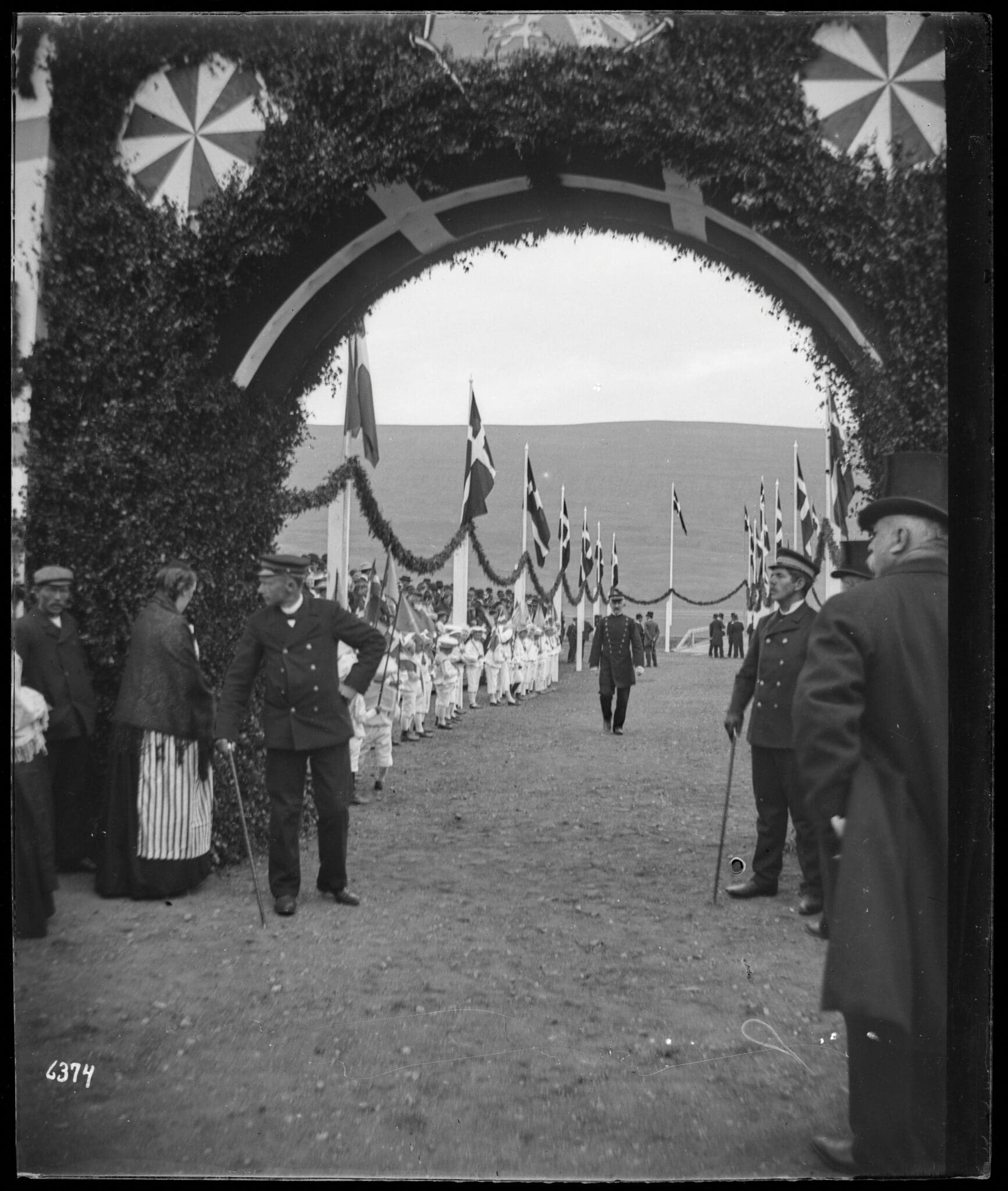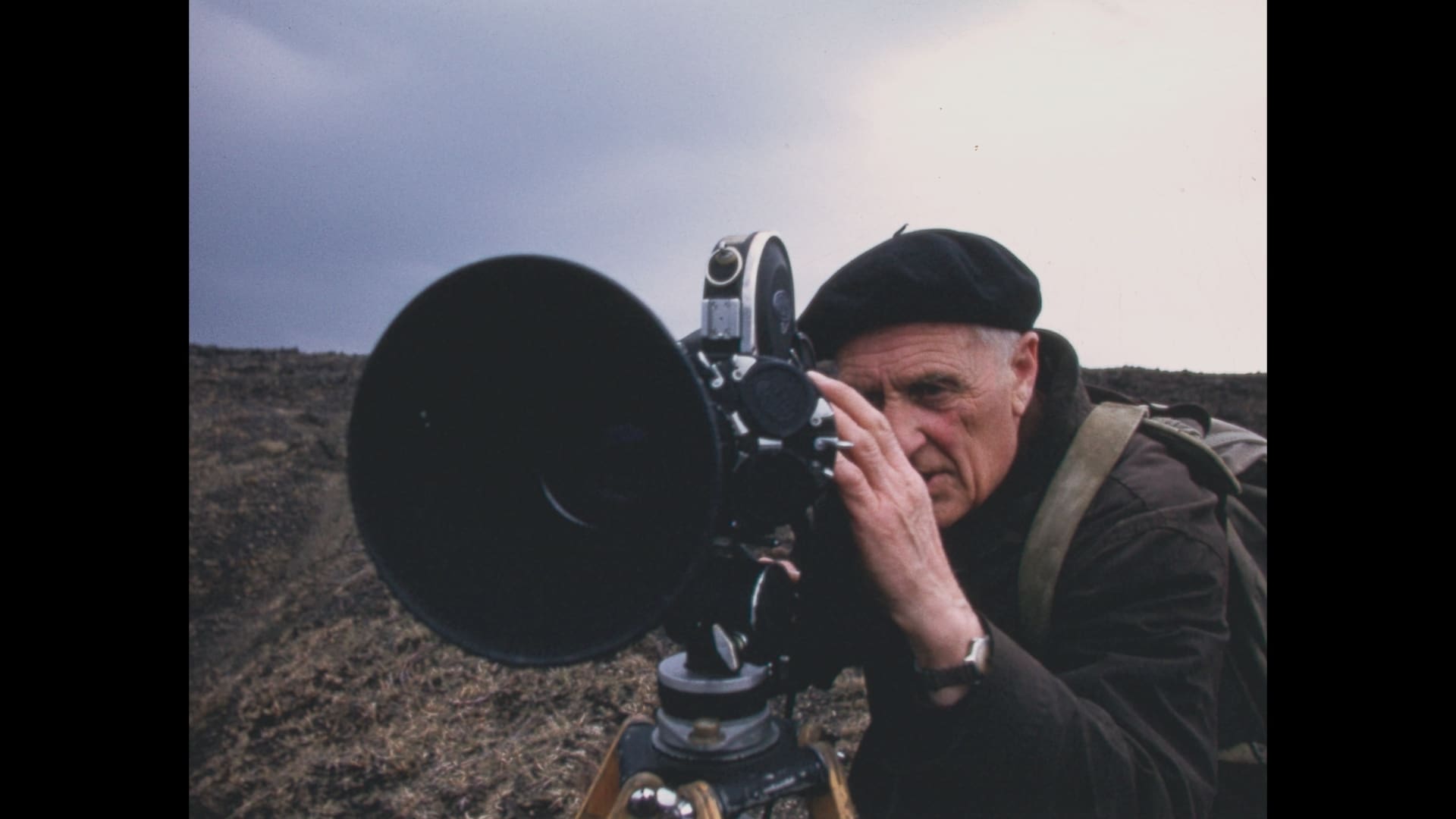
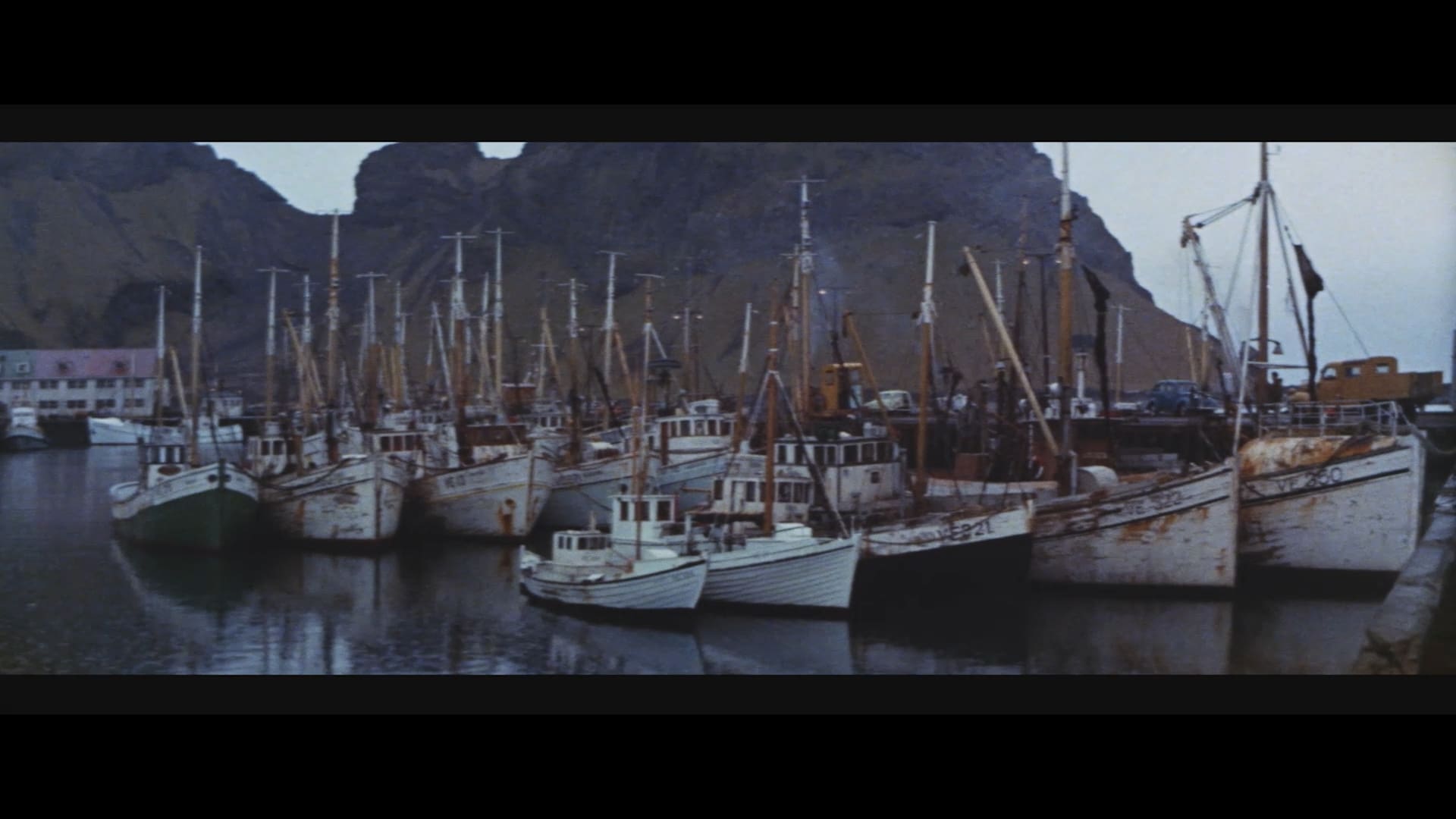
The history of Icelandic cinema has generally been considered to begin in any significant way with the establishment of the Film Fund in 1978.1 The aim of this article is to challenge that idea and propose an alternative perspective on the history of Icelandic filmmaking. On the other hand, it will be argued that our film history before the establishment of the Film Fund is more extensive than has often been let on, and that the productivity of Icelandic filmmakers has been such that a continuity can be seen in Icelandic filmmaking all the way back to 1935, that is to say, that a public screening of an Icelandic film has taken place every year since then.2 However, a proposal is put forward for a periodization of Icelandic film history before the establishment of the Film Fund, based on policies, trends, institutional focuses, aesthetics, education, and other factors that can characterize filmmaking. Such a historical perspective has been sorely lacking, as until now, film history has only been divided into two periods: before and after the establishment of the Film Fund. By defining a new continuity in Icelandic filmmaking and examining the films made before the establishment of the Film Fund as part of a real and tangible film culture, a different film history emerges, and a periodization makes it easier for us to grasp its outlines.
Continuity in filmmaking
It has been common to mark the beginning of professional filmmaking in Iceland with the establishment of the Film Fund in 1978 and the subsequent continuity in the production of full-length feature films.3 This is true, as not a year has passed since 1980 without a new Icelandic feature film being released. Before the establishment of the Film Fund, feature films were few; the first was released in 1949 (Between the mountain and fjöru by Loft Guðmundsson) and the last one was Morðsaga which was released in 1977, directed by Reynir Oddsson. Between then and the establishment of the Film Fund, eight full-length Icelandic feature films were released; there was therefore a long gap between films and obviously no continuity in their production. Therefore, filmmaking before the establishment of the Film Fund has often been boiled down to a period of experimentation by a few pioneers who made films in the face of great difficulties.
But here it might be a good idea to pause and reconsider what is meant by continuity in filmmaking. In film studies, a rich tradition has developed of viewing the production of feature-length narrative films as the benchmark for a nation's filmmaking. But in a country with about 150,000 inhabitants in 1950, the same demands cannot be placed on filmmaking as in larger small nations with over a million inhabitants—let alone major nations with established film industries. This is not an attempt to lower the bar on the number of feature films considered necessary to sustain a vibrant film culture, but rather a proposal to reconsider what constitutes a valid contribution to cinematic continuity in Iceland. Most of the films made in Iceland before the establishment of the Film Fund do not fall into the category of traditional narrative films, but upon closer inspection, recurring themes and film genres can be seen, such as festival films, promotional films, mountain films, newsreels, skiing films, or sports films.4 These were films made in Iceland by Icelandic filmmakers, most of which were produced within an institutional context and always with Icelandic funding. Together, they formed a film culture and a dialogue among themselves that is worthy of study.
I have described the institutionalization of Icelandic cinema in the articles „Master of the Frame“ (2023) and „The Artist and the Archivist“ (2024), and with the concept of institutionalization, I refer to the fact that institutions and organizations began to invest in filmmaking on a regular basis following the Fisheries Commission's first investment of public funds in filmmaking in 1935. Before then, Loftur Guðmundsson and Peter Petersen had been the country's most prolific filmmakers, but their work was almost entirely produced with their own funds or as advertising for private individuals. When it was difficult to secure funding, often several years would pass between films. With the introduction of public funding for filmmaking, it became easier for filmmakers to pursue their work, and this is best seen in the emergence of a film industry continuity from 1935.
For this reason, it is natural to look to this point in the discussion of the beginning of continuous Icelandic filmmaking and its institutionalization. However, it must be noted that the film commissioned by the Fisheries Commission in 1935 was never publicly shown. But it was, however, the first Icelandic film to be produced with public funds and marked the beginning of major changes. Vigfús Sigurgeirsson, who was sent to Germany on behalf of the Fisheries Commission to buy a film camera and learn how to use it, returned home in 1936 and immediately began making films, both on his own initiative and on behalf of the Swedish-Icelandic Society, which hired him to film a Swedish choir's tour of Iceland. In the fall, he showed the film at a public screening at the Oddfellow House, but it has not been preserved in its entirety, and no further public screenings are known („Swedish-Icelandic Society“ 1936: 3). In 1936, Kjartan Ó. Bjarnason also began filmmaking with recordings of excursions organized by the Gutenberg State Printing House, but that film was not completed until 1939 (KvSÍ: Kf 20-9, 1 and Kf 20-9, 2).
In 1937, the Gardening Society of Iceland showed a film about Icelandic gardening, which Vigfús Sigurgeirsson had been hired to make for the society throughout the Nordic countries as well as in Iceland („Norræna garðyrkjusýning í Kaupmannahöfn“ 1937: 2). Kjartan Ó. Bjarnason likely showed the first color film made in Iceland in 1938, produced by the Social Democratic Party of Reykjavík and the Communist Party of the May Day celebrations, that same year he showed films of sports competitions on behalf of the Icelandic Sports Federation („The Working People of Reykjavík Show Their Unanimous Support for the Union“ 1938: 1; „I.S.I. Sports Film“ 1938: 3). During these years, most screenings took place in community halls run by the associations for which they were made. The films were rarely shown at general screenings in movie theaters, although there are certainly some examples, but they were more often shown at special screenings in movie theaters. In 1939, there was a World's Fair in New York, and Iceland participated with its own pavilion. Experienced personnel could be hired to handle filmmaking for the Icelandic pavilion, and Loftur Guðmundsson and Vigfús Sigurgeirsson were chosen. Film projects, financed by public entities and associations, had become the foundation of filmmaking in Iceland.
The framework for filmmaking in Iceland had been established. It can be said that this framework created continuity in filmmaking starting in 1935, which has remained very similar ever since. In the first years, filmmaking in Iceland grew slowly, but as the 1940s progressed, the number of filmmakers increased. Some pursued education in filmmaking, and international connections increased; for example, between 1940 and 1945, Vigfús Sigurgeirsson, Kjartan Ó. Bjarnason, Sigurður G. Norðdahl, Ólafur K. Magnússon, Gunnar Rúnar Ólafsson, and Loftur Guðmundsson all worked or studied filmmaking in New York for a time.Although some pursued formal education in filmmaking and international connections grew, for example, between 1940 and 1945, Vigfús Sigurgeirsson, Kjartan Ó. Bjarnason, Sigurður G. Norðdahl, Ólafur K. Magnússon, Gunnar Rúnar Ólafsson, and Loftur Guðmundsson all worked or studied filmmaking in New York, each at different times. Despite difficulties and a lack of resources, films were released throughout the war years, and after the war ended, there was a significant increase in filmmaking due to the economic upturn. Despite the hardships and shortages, films were released throughout the war years, and after the war ended, there was a significant increase in filmmaking due to economic changes in the country and easier travel abroad. Most of the films were full-length documentaries, with a title card and a credits list, but some of the films made by independent filmmakers were without any title cards. In the 1940s, almost all films were silent, but some experimented with sound, such as Kjartan Ó. Bjarnason with Establishment of the Republic of Iceland (1946) and Óskar Gíslason with Reykjavik of Our Days – Part Two (1948). The first sound film was then Lofts Guðmundsson's film Milli fjalls og fjöru which was released in 1949. Usually, the silent films were shown with live commentary or music.
In the 1940s, the institutional framework for filmmaking began to expand and strengthen. The first Icelandic film company, Saga, was founded in 1944 and was intended to promote national filmmaking („First Icelandic Filming Company Founded“ 1944: 1). Then, the Educational Office (later the Educational Media Institute) had begun producing films as early as 1943 when it hired Kjartan Ó. Bjarnason to make a film about the Westman Islands („American Red Cross Gives Educational Directorate 20 Sound Films for Children“ 1943: 3). At the end of the Second World War, filmmaking became easier and the country's economy improved, so the number of filmmakers and films increased considerably each year, Icelanders' technical knowledge improved greatly, and more complex projects were undertaken. In 1949, feature-length fiction films became a part of the landscape when Loftur Guðmundsson made the first one, Milli fjalls og fjöru. The country's first dedicated film fund was established in 1952 when the people of Skaftafell founded their own fund to finance a film about their home region, and the number of such hometown films became considerable („Skaptfellingar kvikmynda heimbyggð sína“ 1952: 2).
It is difficult to compile a list of all the films made in Iceland following institutionalization, as that would involve a rather extensive research effort, since to date, few of them have been documented. However, the known titles have now become numerous enough to draw conclusions from. Therefore, a list will be compiled here with examples of one film that premiered each year from 1935 to 1950 to demonstrate the continuity that existed in Icelandic filmmaking during the period:
1935 – The Fisheries Commission's Film of Iceland (Kamban and Burkert)
1936 – Swedish Choirs in Iceland (Vigfús Sigurgeirsson)
1937 – Gardening Film (Vigfús Sigurgeirsson)
1938 – ISI Sports Competition (Kjartan Ó. Bjarnason)
1939 – Sea Power (Loftur Guðmundsson)
1940 – Wrestling Club Ármann (Kjartan Ó. Bjarnason)
1941 – You are our dear mother (Kjartan Ó. Bjarnason)
1942 – Hvannalinda and Kverkfjall Trip (Edward Sigurgeirsson)
1943 – Fimmvörðuháls (Vigfús Sigurgeirsson)
1944 – The Establishment of the Republic (Óskar Gíslason)
1945 – News photo (Óskar Gíslason)
1946 – May 1 in Hafnarfjörður (Gunnar Rúnar Ólafsson)
1947 – Icelanders in the New World (Sigurður G. Norðdahl)
1948 – The KR Movie (Vigfús Sigurgeirsson)
1949 – Cod Egg Fishing (Osvaldur Knudsen)
1950 – Seaman's Life (Ásgeir Long)
The continuity in filmmaking seen here was based in large part on a steady stream of projects that Icelandic filmmakers had the opportunity to take on for institutions and non-profit organizations. Film culture in Iceland had become widespread by the 1940s, institutions were involved in filmmaking and supported a large part of it, and a number of films by Icelandic filmmakers were released each year. Film funds and societies were established, and public screenings of Icelandic films were common.
Although it has generally been considered until now that Icelandic filmmaking truly began with the establishment of the Film Fund in 1978, I would like to argue that Icelandic filmmaking and the creation of Icelandic film traditions can be traced back to the year 1935. The same laws cannot apply in Iceland as in much larger societies, where feature-length fiction films are the standard of filmmaking and are supported by large film funds or well-established private individuals. Although characterized by short documentaries, there was great flourishing in Icelandic filmmaking and room for experimentation with aesthetics, artistic ideas, and different types of films. A closer look at the films of certain directors even reveals how they managed to evolve as documentarians, directors, and artists, despite often having no formal education in the field.5 When the history of filmmaking in Iceland is examined, it becomes clear how multifaceted it is, and it is evident that the period before the establishment of the Film Fund was far from being uniform and devoid of events. On the contrary, it is during this period that filmmaking establishes itself in the country, and important developments take place; intriguing filmmakers emerge, take their first steps, and grow and flourish. At the same time, Icelandic society undergoes major changes, prosperity increases, and opportunities in filmmaking become more numerous. A clearer picture of this history can then be gained by examining it in light of certain key points and thus classifying it into specific phases and periods.
Historical periods of Icelandic film history
The view that filmmaking in Iceland before the days of the Film Fund was largely a series of haphazard experiments characterized by a lack of equipment, primitive conditions, and a shortage of public funding is rejected here. This is a limiting prescription for further research on film history and provides a very distorted view of it. After working on research into Icelandic film history at the National Film Archive of Iceland for the past few years, certain emphases, patterns, changes, and characteristics have begun to become clearer that I want to use to divide the history into periods. Such a division provides a clearer picture of a more complex history, and although there is not space to do it justice here, this division is possibly the first step towards a systematic study of it. This division outlines the contours of a new film history, while also seeking to shed further light on the development of filmmaking in Iceland, and to understand certain key aspects, changes, and focuses that would otherwise be difficult to discern. Certainly, such a division is inherently limited, and there are many exceptions to the characteristics defined for each period. However, it provides a good overall view and a picture of the development of Icelandic film history from its beginnings up to the establishment of the Film Fund.
1891-1918
The history of filmmaking in Iceland and the beginning of film culture.
In 1891, the motion picture technology was first discussed in Icelandic newspapers, where it was mentioned as a new invention by Edison that he planned to show at the World's Columbian Exposition in Chicago („Bandaríkin í Norður-Ameríku“ 1891: 187). In 1896, the first Icelander saw a motion picture and wrote about it in the newspapers (Hannes Þorsteinsson 1896: 180). Around the same time, the first foreign parties came to Iceland to film (in 1901) and to show them (in 1903). Icelanders made their first attempt at filmmaking in 1904, and the first movie theater was established in 1906. The cinema became established and was later Gamla bíó, but Icelandic filmmaking seems to have stalled on this single attempt by Magnús Ólafsson in 1904. The oldest surviving film of Iceland from a 1906 fire department drill was made by the first manager of Gamla bíó, the Dane Alfred Lind. Nýja bíó was established in 1912 and firmly established the popular new medium. More foreign parties came to the country to film.
1919-1934
Filming begins, the first filmmaker
When Peter Petersen, the owner of Gamla Bíó, came to the country after a visit to Denmark in 1919, he brought a film camera with him. He began to film various things around Reykjavík and show them regularly at his movie theater. That same year, a Danish film crew came and filmed The History of the Civil War amid much fanfare and the participation of many Icelanders. In 1923, Loftur Guðmundsson returned home from Denmark after studying photography and filmmaking. He immediately began making films, including the dramatic The Adventures of John and Gwendolyn (1923), the documentary Iceland in motion (1925) and The Althingi Festival of 1930 (1930). He financed his films either on his own or with the help of well-established companies. The government's interest in filmmaking was very limited at this time. Several photographers experimented with film technology, and films from that period survive, but they do not appear to have pursued it as a career.
1935-1962
Institutionalization and an increase in filmmakers
Film production was unofficially institutionalized in 1935 when the first film was made with public funds by the Fisheries Commission. Subsequently, associations, public institutions, and others began to hire filmmakers for projects, thus creating the foundation for filmmaking in the country. Continuity began in filmmaking, and not a year passed after 1935 without an Icelandic film being shown in a public setting (by film, this refers to everything from short documentaries to full-length feature films). Additional funding came from public funds that could allocate money for filmmaking, the Cultural Fund and the Educational Film Fund, along with numerous local funds that financed filmmaking in their home regions. The number of filmmakers increased significantly, and most of them received commissioned projects. The first to dedicate himself to filmmaking was Kjartan Ó. Bjarnason, who quit his job as a printer to become a full-time filmmaker in 1945. The first feature-length fiction films were released, Milli fjalls og fjöru in the year 1949 and The last town in the valley in 1950. Cooperation with foreign partners began to compensate for the technical shortcomings of Icelanders. Edda-film, under the leadership of Guðlaugur Rósinkranz, produced Sölku Völku (Arne Mattson, 1954) in collaboration with the Swedes and 79 of the station (Erik Balling, 1962) in collaboration with Dani. The second film marks the end of the period.
1962-1977
New trends, educated filmmakers, and the National Television
Young men went abroad to study filmmaking and brought back new wave ideas to Iceland. Gestur Þorgrímsson, who among other things founded the cinematography company Geysismyndir, gave Reyni Oddsson, a young filmmaker who had studied in the United States and London, an opportunity through the Educational Film Archive and the Society for Accident Prevention to make the film. Accident (1962). Gestur also hired Thorgeir Thorgeirson, who had studied filmmaking in Czechoslovakia, to make a film for the Reykjavík Heat Company. Both of them brought a new flair to Icelandic filmmaking, in the style of new waves and auteurism, to an otherwise conventional institutional filmmaking. A previously unknown aesthetic began to appear in Icelandic filmmaking, and in the spirit of new waves in other countries, the older generation was rejected and deemed outdated. Thoroddsen, who studied filmmaking in Lodz, Poland, returned home and began organizing the film department at RÚV, which was then being established. The younger generation began to pursue more political filmmaking. The number of educated filmmakers multiplied as the 1970s progressed, and most of them went to work for RÚV, often making challenging television films. The older generation united in the Icelandic Filmmakers' Association in 1966 to defend the interests of the profession as well as their material, especially in relation to the Television. The period ended with the release of Murder story (1977) by Reynir Oddsson, which was the last inspired New Wave contribution to Icelandic filmmaking and the establishment of the Film Fund in 1978.
Final words
The history of cinema after the establishment of the Film Fund is a subject of research in itself, and important research has been conducted on it and convincing theories have been put forward. For example, Björn Ægir Norðfjörð has done pioneering work in such analysis and has proposed theories about its division into periods (see e.g. Björn Ægir Norðfjörð 2019: 19–42). The intention here was to argue that there is a reason to examine the history of Icelandic cinema in a broader context. By pointing out that an Icelandic film has been publicly shown every year since 1935, the foundation for research in Icelandic film history is stronger than has been previously thought, which will place it in a considerably more complex context than merely a one-dimensional build-up to the establishment of Kfilm fund.6
Sources
„American Red Cross Gives Educational Directorate 20 Children's Recordings.“ 1943. Vísir, January 9: 3.
„The United States in North America.“ 1891. Isafold, June 13: 186–187.
Björn Ægir Norðfjörð. 2019. „Light in the Dark: The History of Filmmaking in Iceland.“ The Journal 2: 19–42.
„The first Icelandic cinematographers“ association founded. 1944. The Will of the Nation June 28: 1st.
Gravestock, Steve. 2019. A History of Icelandic Film, Toronto: Toronto International Film Festival.
Gunnar Tómas Kristófersson. 2023. „Master of the Frame: On the Filmmaking of Kjartan Ó. Bjarnason.“ Baptisms (spring): 36–64.
Gunnar Tómas Kristófersson. 2024. „The Artist and the Chronicler: On the Filmmaking of Vigfús Sigurgeirsson.“ History 1: 98–129.
Hannes Þorsteinsson. 1896. „Travel Sketches: From the Editor of Þjóðólfur.“ National Banner September 25: 178–180.
„The I.S.I. Sports Film“ 1938. The Morning Paper: 3.
Kjartan Ó. Bjarnason. 1939. KvSÍ, Kf 20-9, 1.
Kjartan Ó. Bjarnason. 1939. KvSÍ, Kf 20-9, 2.
„Nordic Horticultural Exhibition in Copenhagen.“ 1937. The New Newspaper November 25: 2.
„The Swedish-Icelandic Society.“ 1936. Cue November 9: 3rd.
„The working people of Reykjavik show their unanimous support for the merger.“ 1938. The Will of the Nation October 4: 1.
„The Home-Town Filmmakers“ Temper Tantrums." 1952. Time March 20: 2nd.
________________
My best thanks for assistance and reviews go to Björn Þór Vilhjálmsson, Björn Ægir Norðfjörð, Björn Þór Björnsson, and Þóra Sigríður Ingólfsdóttir. There are many exceptions to this, and truly important and valuable research has been conducted that is crucial for understanding and defining the history of Icelandic cinema, which scholars have addressed, most notably Björn Ægir Norðfjörð, Iris Ellenberger, Erlendur Sveinsson, Eggert Þór Bernharðsson, and Björn Þór Vilhjálmsson, who have examined specific parts of the film history and shed important light on it, either in part or in whole. However, when the history of cinema is discussed in general, the division is invariably addressed: before and after the establishment of the Film Fund.
[2] This refers to a film being a moving image that is shown in a public venue, not a full-length feature film as is often meant when films are discussed.
[3] This historical vision can be seen widely, for example, in the most recent history of Icelandic cinema to be published in print, which is Steve Gravestock's (2019) A History of Icelandic Film. Thirteen pages (8–21) of the roughly 200-page book cover film production before 1978, and then almost exclusively feature films. The remainder of the book covers film production after the establishment of the Film Fund.
[4] This is neither an accurate description of the genres nor an exhaustive analysis of them, as such would require another, more in-depth study; this is only a rough idea of the different film genres that existed at the time.
[5] I point this out, among other things, in the articles „The Master of the Frame“ and „The Archivist and the Artist,“ where I review the career of Kjartan Ó. Bjarnason on the one hand and Vigfús Sigurgeirsson on the other, and describe their cinematic focuses and how they change and develop over the years. Björn Ægir Norðfjörð has also been active in analyzing the films of the period in his writing and placing them in the context of international traditions and movements.
[6] My best thanks for assistance and review go to Björn Þór Vilhjálmsson, Björn Ægir Norðfjörð, Björn Þór Björnsson, and Þóra Sigríður Ingólfsdóttir.
Footnotes
- My best thanks for assistance and reviews go to Björn Þór Vilhjálmsson, Björn Ægir Norðfjörð, Björn Þór Björnsson, and Þóra Sigríður Ingólfsdóttir. There are many exceptions to this, and truly important and valuable research has been conducted that is crucial for understanding and defining Icelandic film history, which scholars have addressed, most notably Björn Ægir Norðfjörð, Iris Ellenberger, Erlendur Sveinsson, Eggert Þór Bernharðsson, and Björn Þór Vilhjálmsson, who have examined certain parts of the film history and shed important light on it, either in part or in whole. However, when the history of cinema is discussed in general, the division is invariably addressed: before and after the establishment of the Film Fund. ↩
- This refers to a film being a finished work that is shown in a public venue, not a full-length feature film as is often meant when films are discussed. ↩
- This historical perspective can be seen widely, for example, in the most recent history of Icelandic cinema to be published in print, which is Steve Gravestock's (2019) A History of Icelandic Film. Thirteen pages (8–21) of the roughly 200-page book cover film production before 1978, and then almost exclusively feature films. The remainder of the book covers film production after the establishment of the Film Fund. ↩
- This is neither a precise description of the genres nor an exhaustive analysis of them, as such would require another, more in-depth study; this is only a rough idea of the different film genres that existed at that time. ↩
- I point this out, among other things, in the articles „The Master of the Frame“ and „The Archivist and the Artist,“ where I review the career of Kjartan Ó. Bjarnason on the one hand and Vigfús Sigurgeirsson on the other, and describe their cinematic focuses and how they change and develop over the years. Björn Ægir Norðfjörð has also been active in analyzing the films of the period in his writing and placing them in the context of international traditions and movements. ↩
- My best thanks for assistance and review go to Björn Þór Vilhjálmsson, Björn Ægir Norðfjörð, Björn Þór Björnsson, and Þóra Sigríður Ingólfsdóttir. ↩