Jón Hermannsson
Interviewee: Jón Hermannsson (JH)
Gunnþóra Halldórsdóttir (GH) conducted an interview on 09/05/22
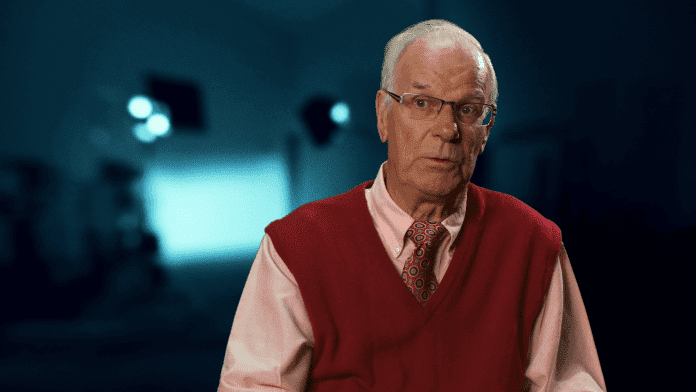
Jón Hermannsson (1939 – 2025), a technician and film producer, worked his entire career in filmmaking and film production. He began working at Sjónvarpið before it began its broadcasts and was an active producer in the early years of the Icelandic film boom. He was also the first Icelander to attempt marketing Icelandic films abroad. Jón was concerned with preserving his footage for future preservation at the National Film Archive of Iceland and was, in fact, in contact with the archive right up until his death. Here you can see the curriculum vitae. which he released in late autumn 2025. In the following interview/conversation, he recounts the main events of his long career.
The Beginning
Good morning How did you get into the world of television and film?
JH: I studied engineering in Britain at the City & Guilds of London Institute, specializing in the distribution of radio and television content. Yes, I just studied that out there in England; I was there for four years. I left in 1960 and came home in ’64, and afterward I was hired by the television.
That's where I first started counting antennas. The equipment wasn't operational there at the beginning, but a whole bunch of technicians had been hired, and they were just used to drive around the South Coast and count television antennas because nobody had any idea how many television sets there were in the country. That's how the figure for how many television sets there were came about. Just by driving all the streets in Reykjavik and the surrounding area, and in the Flóan [Selfoss and nearby areas]. They went all the way up to Skagafjörður, everywhere people could see the American TV.
So I'm there at the TV station, in charge of the technical department, There was, of course, an engineer who was in charge of all the technical gear, but I was in charge of the technical department and had pretty much all the staff, except for the film department, which was always separate at that time; it was maybe a third of the technical crew. All the technicians got their training in Denmark; it was a pretty intensive course for four months or so. It was actually very clever, but none of us in the technical department had ever been near anything like that. They had, of course, learned there, Thoroddsen [Thoroddsen] and Gísli Gests [Gísli Gestsson], who were originally in the movies. Then there were just guys like Óskar Gísla [Óskar Gíslason] and those who were photographers by trade but then went into filmmaking in a big way.
Good morning What education did the technicians have?
JH: These were radio operators, telephone operators, aviators, and photographers, like Rúnar Gunnarsson.
Good morning Is he there right at the beginning?
JH: Yes, he goes into the film department. Thrándur [Thoroddsen] was in charge of it, and then I took over from Thrándur. I moved from the technical department. I'd had enough of being in the dark all day, so I moved and took over the film department when Thrándur left.
Good morning So you started at Sjónvarpið in 1964?
JH: Yeah, right at the very beginning. The first thing I did was actually just a few days after I was hired. Then a letter came from the Ministry of Education and a plane ticket to Denmark, and I was there for three weeks before the group [the technicians] arrived, just preparing for the other staff to arrive for the course. So one thing led to another, and when we started filming, I naturally got into movies. I never worked as a technician again after I left the TV station.
ENTERING FILMMAKING
JH: In the old days, the output at the Television was absolutely tremendous. People were sent out, and when we closed in July, two film crews were always sent out, and they had to produce one program a day to stock up for the winter. They were kind of farm movies and landscapes, but it wasn't just interviews; there weren't many interviews. It was just filming in all directions for the entire duration of the film.
Good morning You Throndur are so early that you've already started producing something yourselves, apart from the TV.
JH: The year I quit television [1976], we recorded Folklore and then I've just been self-employed ever since. We did something else, we were working for the Tourist Board. The countryside was so run-down; if you drove along the highway, you'd see rusty tractors everywhere, and everything was more or less in disrepair. We made a propaganda film for the Tourist Board and showed all the dirtiest and most disgusting places in the country. It was a lot of fun.
Good morning You haven't been in any Iceland promotional films? It seems that filmmakers of the past mainly got their funding through such promotional films, Iceland promotional films.
JH: I was very much not into that and I was never in commercials. But then we start working together, Indriði [Indriði G. Þorsteinsson] and I, and it turns out that Gústi [Ágúst Guðmundsson] comes on board with us.
The Collaboration with Ágúst Guðmundsson
JH: Gústi actually comes into this when he's just come from the National Film School in England and we took Daniel Bruun before we went in Land and son and then we took a little picture, Gústi and I, which was called Little Hill and was shown on TV. I was very little involved with the technology in these movies because it's just enough to keep track of it. Admittedly, I ran the generator.
We got some money from the Cultural Fund when we did Daniel Bruun As I recall. The Cultural Fund came before the Film Fund, but it also covered literature and was meant to support all the arts. It was an effort, though, and people got started, even though the grant amounts were, of course, nothing like what happens today.
Good morning But did the possibilities for financing films change significantly when the Film Fund was finally established?
JH: Well, opportunities naturally opened up, but Reynir [Oddsson] isn't enjoying it; he's just gotten married. Murder story. Then came Land og synir and the film industry. We were the first to show it to Krummi [Hrafn Gunnlaugsson], who took Óðal feðranna At the same time, they were half a year behind us in showing it, and the attendance was absolutely ridiculous.
Good morning Until you started working independently, you were titled a sound engineer but in Land and Sons Are you a credited producer?
JH: Yeah, that's mainly because I had such a good knowledge of the technical side and the gear that was needed. I benefited from my experience at Sjónvarpið and from being involved in everything—doing the sound and video recording, editing, and all that. We shot on 35mm, and nothing like that had ever been done before. Around the time we were preparing Land and son For example, I bought a generator, a big generator truck, because the rural power dropped all the way down to 180 volts when they started up the hay blower. Everything would have gone to hell in a handbasket if we had been using that power, so we had to be self-sufficient.
Good morning But how was this financed? As you say, the first films naturally had a huge turnout, so admission fees have now been part of the financing.
JH: We now went to another hundred [another hundred thousand viewers] with Land and son. I actually remember that To get everything straight had more viewers, but that was also based on the kids going two and three times to To get everything straight and that counts naturally, but when we showed Land and son I think the average age was maybe around fifty.
We premiered Land and son simultaneously at the Austurbæjarbíó and in Dalvík, where the screenings started at 3 PM and ended at 3 AM. Just a quick bite because there was so much pressure to get the film to the theater in Akureyri the next day, and the theater in Dalvík was just so tiny, tiny—I don't remember what its capacity was, 50 or 60 people. It was such a novelty.
There was a lot going on, of course. People were… or the movie theaters out in the countryside were cheating and reselling tickets, but naturally, all sorts of things were happening. Gústi was hustling in Siglufjörður, reselling tickets; they wouldn't tear the ticket off and would just sell it again. These were tickets from us; we got the tickets ourselves. Then this kind of country TV show came along, in Ólafsfjörður I think, they wired the whole town for video, and when we're showing Land and son Then one guy comes in with a camera and he's just going to film this in the theater for distribution. That naturally had to be stopped.
In Skagafjörður, they went the farthest for the filming, I think, because Indriði is, of course, a Skagfirðingur and the story is supposed to take place in Skagafjörður. The Lions Club in Krokssvík just took a bus around all the villages of Skagafjörður and picked up the old folks from the farms who had maybe never been to a movie in their lives, and they were just driven to the movies. It didn't really concern us; it was just their initiative.
This went incredibly well and we were perhaps filled with optimism when we decided to go in The Outlaw Two years later, but that was really just a completely different story; it was nothing like it. The Film Fund had come on board by then, but it provided less than 2% of the film's financing.
Good morning But in Land and Sons, was it also that small?
JH: No, there was much more there, it was also such much cheaper production than The Outlaw. Just the set design cost in The Outlaw was absolutely half of the production cost. We were shooting on and off for a whole year because we have winter scenes, and then we built a studio on Suðurlandsbraut where all the interior scenes were shot. It was a kind of backlot that some car dealership had used, but it was fine, we set everything up, but it was expensive. I think we were about $200,000 in the red by the time we were done showing it at home, but it also sold a little abroad, and that money always made a difference.
Good morning Do you think she has sold more than Land og synir abroad?
JH: No, it's been similar, for example, we sold Land and son to Turkey on television. I found that very strange. These pictures didn't really go into the Latin section much, but still, The Outlaw went somewhere there, for example to France. The Outlaw I believe it was shown on Arte, a German-French television channel, and on FR3. Ágúst appeared on a talk show beforehand, along with Regis Boyer [a professor of Nordic studies at the Sorbonne and for many years one of the most active translators of Icelandic literature into French, both ancient and modern] and others. The French channels, however, did not pay as much as the German channel ZDF, Zweites Deutsches Fernsehen. Channel 2 in that country. The payment was particularly high in Germany and, of course, dubbed in German.
After The Outlaw I was doing this and that. I worked a lot with Heiðar Marteins, promoting his films. I edited films for him, and they aired exclusively on TV. And after the video came out, it made its way onto the ships, and they were buying it from the poor guy. But of course, it was a complete financial disaster. He was a correspondent in the Westman Islands, and that's how we met. We always had courses at the TV station for the correspondents, and we taught them how to narrate and how to shoot footage. We weren't teaching them editing at all.
That was the main problem with a lot of these reporters: they'd come to this course, go home, and the camera would just go in a box. Then maybe six months later, something newsworthy would come up that they thought was worth it. What they shot was usually unusable; they just had no practice. They should have been encouraged a lot more to shoot. We did encourage them to send in film because they were getting film from us; they never had their own, but Heiðar was the most persistent at it. He was just such a good cinematographer.
The Collaboration with Thráinn Bertelsson
JH: Then I started working with Þráinn [Bertelsson]. I was much more involved in the production of those films. I think I was the sound guy on pretty much all the movies, and that was a lot more fun than being some fucking producer who was always worried. We didn't have any worries, Thráinn and I. I think we got a grant in New life, the first one, and then it was just the Útvegsbankinn in Vestmannaeyjar; he was into it. This way, the money turned over much faster than lending to a fisherman who would have to sell the fish and get paid and all that, so the bank did well in these transactions.
Good morning During these years, the Film Fund's involvement was very small; the contribution from this fund was not a high percentage of the total cost.
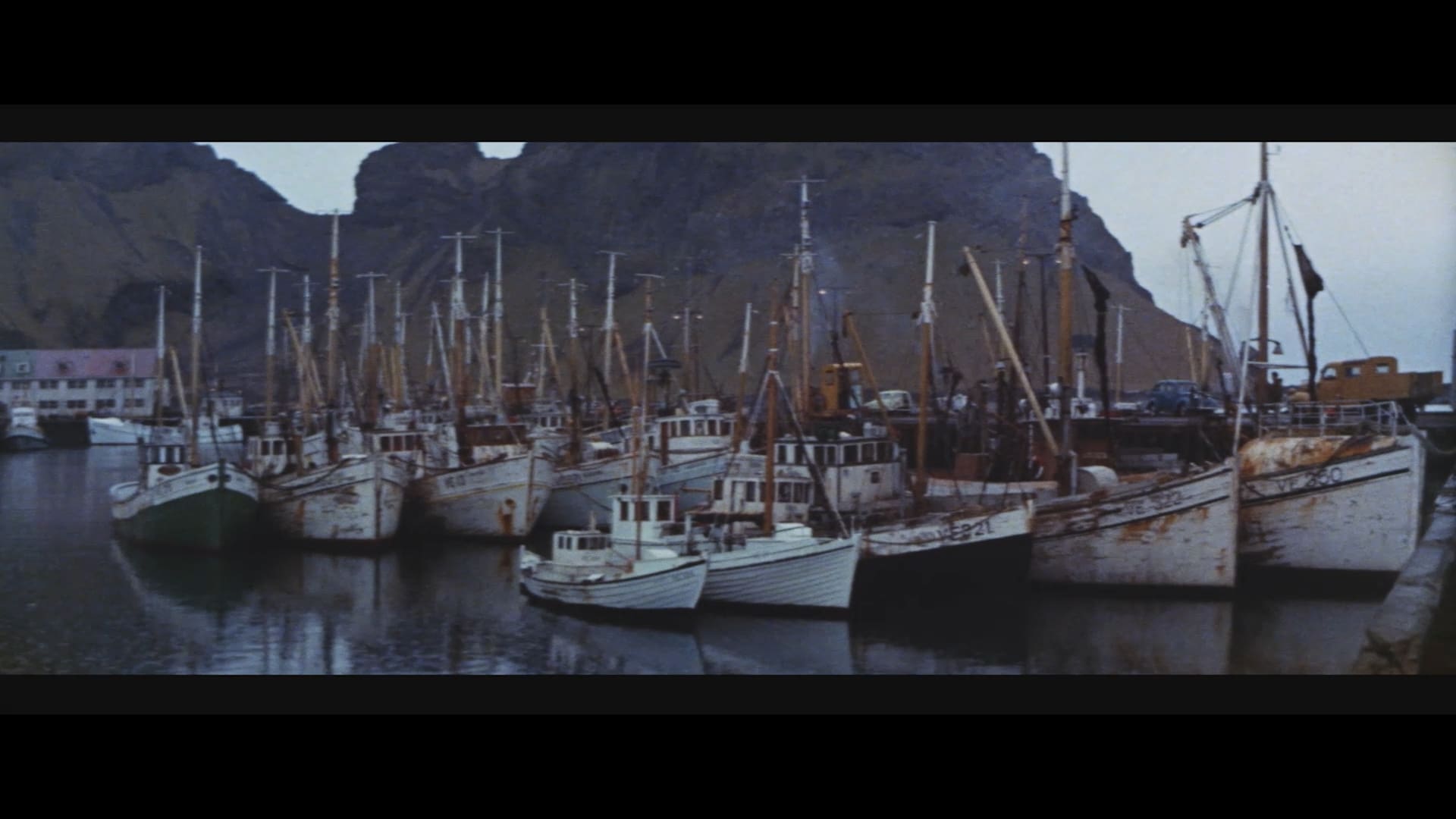
JH: No, but there was just so much goodwill with all those older films. People were more than willing to lend things and help out, and there was no demand for any payment or anything like that. Going into a freezer plant and filming there, maybe no production for half a day, that was never even mentioned. The people of Westman Islands were of course very happy with the attention and all that, and it put the Islands on the map in a way.
So we do Farm life and the fund has nothing to do with that. It was just said that there was no point in funding comedy films. We got a grant for the first film, New life, but then the thinking was that we were dealing with the fishing industry, and I think that strengthened us quite a bit. I don't think anyone else is getting into the fishing industry, until Ásdís [Thoroddsen] runs with it. Ingaló. Thor and I did New life, Farm life And so it is. Skammdegi.
Yeah, that's where everything went to hell. Skammdegi The movie was so thoroughly panned in the Moggan that it had no hope of recovery. Árni Þórarinsson tore the film apart and we got no box office. There are some problems with it, but it was perfectly fine except for the ending. I think we made three attempts with different endings and none of them quite worked. It was a bit of a shame because there was a lot that was quite special about this movie, and especially Eggert [Þorleifsson's] performance—he was absolutely brilliant.
Good morning So you didn't work together anymore, you and Thráinn, after this?
JH: No, he did Police life and then he did Private life which just completely turned him upside down. Of course, he did. Magnús, she's okay but the other one was just some nonsense, I thought, taken at 35 and 16. Thráinn always invited me to premieres and he asked after Private life: „How do you think this one will do?“ I said, „This one won't do at all, it's just a completely hopeless movie.“
After Thráinn and I stopped working together, I was exclusively in documentary and educational films, and then I started working with Guðmundur Sigvaldason on The geology. So I did quite a bit of educational material; for example, I made chemistry curriculum directly for the National Educational Supplies Institute back in the day, and I also did some educational material for them about the coastal nature, about sea life and seals and that sort of thing. That's basically what I do in between; it just comes in, one thing at a time, in between other projects.
A Pilot Program for the International Distribution of Icelandic Films
JH: The period after The Outlaw, or when I had gotten rid of The Outlaw Let's just say, when I no longer had to sit and cry over the bills, it occurred to me to try selling Icelandic movies abroad because I just thought it was stupid that no one had even tried. The Film Fund hadn't been involved in any of that back then.
Anyway, I went to the Nordic Screenings at least twice, if not three times, where the television channels were participating jointly, but I went on my own. I didn't go on behalf of the TV station, and of course, it wasn't any kind of business; it didn't sell in large numbers. But still, I sold to America and Turkey and some to Asia, never anything to the Nordic countries, which was really strange, except for Finland. Both for television and for theaters.
Good morning What pictures are you talking about?
JH: This was Land og synir and the picture by Thorsteinn Jónsson, Atómstöðin, and I actually sold it to East Germany. They definitely bought it mainly because of the title. Then I went to France twice, both to Cannes and Monte Carlo, which was the television market, and one trip to America, to New Orleans, that was the American Film Market. It's a very tough world, and for example, Icelandic Television was no help at all because they sold through Danish television.
Good morning Didn't they help provide some contacts?
JH: No, nothing, they just left it completely up to Dani. They just didn't get involved at all. I never would have kept it going anyway; it was too shady a business for that. and when you're selling movies the commission is usually maybe like 10% or something like that and you need a pretty big one to cover the cost of going to one of these screenings is—or at least it was at that time—up to half a million. Because you had to rent a booth, you had to print promotional material for everything, for all the films I took with me. But I got a grant from the Industrial Development Fund, which didn't quite cover the costs, but it was a huge help, of course. I'm probably talking about around 1983-1985, the years before Thráinn and I started working together, but thankfully, no one else has tried this but me.
There was hardly any scripted material re-run on TV from the beginning, and at least until I quit because there was a 100% refund for actors on reruns on Icelandic TV. Then Thrándur just broke it the year after I quit TV. Then we went to Skagafjörður and took Seven Folktales, it was just a „buy-out“ rights and no hassle, and we sold these to the TV station. Folklore, they were allowed to re-run them 3-4 times, which was kind of special, it was a bit of another world, reruns weren't usually part of the programming. Just one show and that was made very clear. Now there's some kind of rerun rights for a certain period, 7 years or something like that.
Good morning But in these four sales runs, what did you sell best? Which images were included, and what sold best?
JH: It was easiest to sell documentaries; our feature films from that time aren't much of a commodity. When Thráinn and I are together, I sell Farm life to Germany, it was re-run three times, and the Germans absolutely loved it. Comedy has a very hard time, just like Stella on vacation which is actually my favorite movie. The Swedes just thought it was making fun of Swedes because Salomon was in it, and they took it very badly.
So we sold The Outlaw to Germany and it was dubbed in German. All the Icelandic movies were really well dubbed in German. Icelandic is pretty easy; it's much harder to dub into English, it's almost impossible, but the similarity between Icelandic and German naturally helped the Germans. You don't notice it, it's so well done.
We The Outlaw We did this with the English version. We took everything twice in The Outlaw, We shot all the scenes in Icelandic and English. Then we just threw away all the audio recordings with the Icelandic actors who spoke English because there were naturally all kinds of pronunciation variations and some didn't know English, like Þráinn Karlsson, he didn't know any English. Gústi just coached him, word for word. We obviously messed that up—we were so completely broke that I remember at the time it was like 150, almost 200 thousand dollars in the red, when we were pretty much done selling internationally – we didn't do the English version until 10 years later, and by then it was all dead; you don't market a movie after 10 years.
Good morning So, how did you deal with such a deficit, and what could be done?
JH: We were just working on that, but the rest of the debt ended up at the Búnaðarbankinn, and there we had it converted into a commodity loan, which meant there were no interest and easy payments, and then we could pay it down, I think, over two years. And then Ísfilm comes in, the television station, and we got rid of a large part of it. Because they took all our equipment. So it was maybe down to like 20-30,000 dollars for the rest, which was quite manageable.
Good morning As a company, have you been called many names?
JH: Yes, there are a few. Our company, Thrándar, was called Ísjaki; that was just right after I left the TV station, and we made these, so to speak. Seven Folktales and some pictures for the Tourist Board. Then there was Iceland Film, and we make Land and son and The Outlaw, with Gústi. Then Gústi leaves when I'm sitting in the soup and does To get everything straight. He never came anywhere near the trouble.
So when I got into marketing, it was called Icelandic Films, Icelandic movies. So that's why the Consortium [the Icelandic Film Consortium] was created, because we, of course, owned Icelandic Films. And then three years later, Thráinn and I started working together, and that company was called Nýtt líf. The last company was Tefra when I was working The geology with geologist Gudmundur Sigvaldason.
Documentary Films
JH: The geology segments that Gudmundur and I made, The vast deeps of the clouds, were very thoroughly funded by the Film Fund. It's six episodes and it was filmed all over the world. We were working on it for three, four years. This was right around 1990 and the Fund [the Film Fund] was involved for three years in a row, very hands-on. In this particular case, it was the board of the fund, not advisors or anything of that sort, that made the decisions about the grants. The board, with Knut [Hallssson], was made up mostly of academics or people from the education sector, and that's why we got good treatment, because this was right up their alley.
And it was split into three parts, so we never planned on anything other than shooting it over three years because it was on different continents and not in crowded places, but it was just practical for us to do it over such a long period. The school system paid for the script, but it was, of course, a hell of a job for Gudmund to write it.
I think, aside from, of course, everything that's happening now with these distributors and things like that, that these geology programs made from Icelandic material went all over the world in their time. For example, they were shown in the American school system in more than 20 states. They aired on television in Italy, Spain, and France. But nowhere in the Nordic countries, never. Oh, and in Britain. And then in the United States, but a good half of the income came from the school system. I knew it was used in high school in America.
Here at home, we set a sort of 12-year mark for the content, so that everyone 12 years old and older in the school system could follow along. This was used a lot and is still in use in high schools, but the lower limit was 12 years old. It was written as purely educational and instructional material, which was always the intention anyway, but I think the fund paid for about half of the cost of that project.
Good morning Isn't that rather unusual?
JH: Yeah, for a documentary like this, they were naturally made in cooperation with the Educational Film Archive back in the day. They had a few films made, or maybe they didn't, but they sponsored a few films back in the day, and the sponsorship definitely covered the film costs, even though you didn't get paid for the work. That was just the way it was in this business, and then naturally, Television completely failed to show it.
And you see it even today, we're kicking some kids out of the movie business in droves. But you've just never seen anything from these poor kids on television. I have so much contempt for the Television that I could be here for another half an hour and tell you everything I think about it. They just don't measure up, and they never really have. I think filmmakers had very high hopes for the Television, as a lot of Icelandic content was shown, but it was more or less all from them. We filmmakers, however, were not hired to produce for the Television.
The vast deeps of the clouds were shown on Hringbraut this winter. I gave Sigmund Erni [Rúnarsson] the rights to show the episodes, or sold him the rights for a króna, when the volcano erupted out on the Reykjanes Peninsula, because this is, of course, just geology information.
The Tenth Decade
JH: I was in Ireland for a year and a half. I produced two films in Ireland, one for the French and the other for the Germans. This was in 1995 or ’96. It came about through Ralph Christians [who worked in production in Iceland for years]. He's been producing in Ireland, I saw on Netflix. I don't know what his part in it was, but it's something at least. He was always just flying around chasing girls, but I think he settled down in Ireland in the end. He was in many ways a hell of a smart, creative, and funny guy, but then he was shameless and dishonest, and it's very hard to work long-term with people like that.
We were just hired as a work crew by both the French and the Germans; it was just plain work that we were paid for. We had no part in financing or anything like that. I was basically hired as an executive producer. It was much better working with the French than the Germans. I was so lucky that there was a great director, a Frenchman, who had been working for ten years as an editor in Hollywood, and I've never had a director who was so spontaneous. We shot for about an hour and a half a day for twenty days. The angles were completely clear as soon as he came into the room, and he never changed anything and he was just so confident. It was a huge difference working with people like that.
It was actually pretty much the same thing with Sigurður Sverri [Pálsson]. When he's at Sjónvarpið, he starts as an editor. And when I took over the film department, there was no opening for a cameraman, and he came right out of school and started as an editor, and he was also the best news cameraman; he edited pretty much everything in the machine. He was absolutely brilliant as a news cameraman. He was also naturally very easy to work with, easygoing, and selfless.
He worked with me on practically everything. He even shot the Icelandic episodes—or filmed them—without a director: 21 episodes in total, with no director, just a cinematographer. A cinematographer, a sound recordist, and a script supervisor. It was really great working with Sigurður Sverrir, he's just like that. He and Gústi worked very well together. I don't know how Sigurður Sverrir would have gotten along working with Krummi [Hrafn Gunnlaugsson]; I think it might have been quite a spectacle.
When we made the Icelandic episodes, for example Do you want to learn Icelandic?, The Fund never came close to the 21 episodes of Icelandic for foreigners that were shown on Sjónvarpið. Sjónvarpið also had nothing to do with the making of the episodes; I just produced them out of my own pocket. I think I gave them the broadcasting rights.
Good morning So where did the money come from then?
JH: Out of my own pocket, I think I've lost three or four properties over the years to filmmaking, but not because of the feature films. The documentaries took up much more, and I think that's because I wasn't very good at applying for funding; I very rarely applied. Of all the films I've made, which are over a hundred, less than 10% have been funded by the Film Fund.
Good morning This is very interesting. You'd think there would have been such a big change when the Film Fund was created, but maybe that's not the case?
JH: Not in documentary filmmaking. And yet, maybe now, it's naturally become a bit different when you can also get additional funding from the Ministry of Industry. That of course makes a huge difference, and the amounts that go into the industrial rebate are much higher than what the Film Fund has to work with. We're talking about billions; it's many times what the Fund has at its disposal.
FORWARD TO THE MILLENNIUM
Good morning There you are at the turn of the millennium.
JH: Yeah, and then I do these Icelandic episodes., Do you want to learn Icelandic? They are just the main thing online for Icelandic language teaching for foreigners, and you see, not just for foreigners in Iceland but foreigners out in the world. I think this is on the website of the Ministry of Foreign Affairs. The state bought it, and because I gave the television station the rights to show it, the income was naturally zero. So after I had a lawsuit with the National Broadcasting Service, which I lost, it was decided that this was really going too far and they hit me with a 16 or 17 million fine.
But that didn't quite fix it, because in a society like ours, what cost 30 million last year can cost 45 million now, and in the books, it never shows up. I don't know, I was completely broke, of course, but I had a pretty good support system; my wife could always take care of me.
Good morning Yeah, that's basically the next question, how was this possible? Did she foresee you in this struggle with the minuses, and then the pluses came in between?
JH: Well, I was never on the clock, and at least not when we're working. The Outlaw, I was just struggling without getting a penny for myself but then Kolla [Kolbrún Jóhannesdóttir] just paid for the food and the payments. So I was better off than a lot of people with that. Because she came from the retail industry, she always said this was more of a „lazy business,“ and she was absolutely right about that.
Good morning Do you remember that house where the Frame Shop was down on Hafnarstræti and you had a workspace?
JH: The family owned it, that's the whole operation. But whether I was working with Thráinn or Indriði and Gústi, I was on Hafnarstræti, and I never charged for a camera or any rent; everyone was in free housing. I wasn't charged by the family, of course. It was the top floor, and there used to be a fur salon there. Remember the mohair coats? They were sewn there. Then it just went under, and the place sat empty for years.
You see, this was the apartment of the first mayor of Reykjavik. There were gorgeous rosettes on the ceiling and along the edges, very ornate, and even the handrail on the stairs was carved by Rikhard Jónsson.
Everything and nothing
Good morning What have you been doing for the last 20 years?
JH: I've just been tinkering, as I call it, kind of dusting off old stuff that I never finished. A hunting movie I shot 50 years ago on Super 8, and it actually came out incredibly well. If the lighting is good, you can hardly tell the difference between 16mm and Super 8. I made a lot of those, and of course, it's all on film.
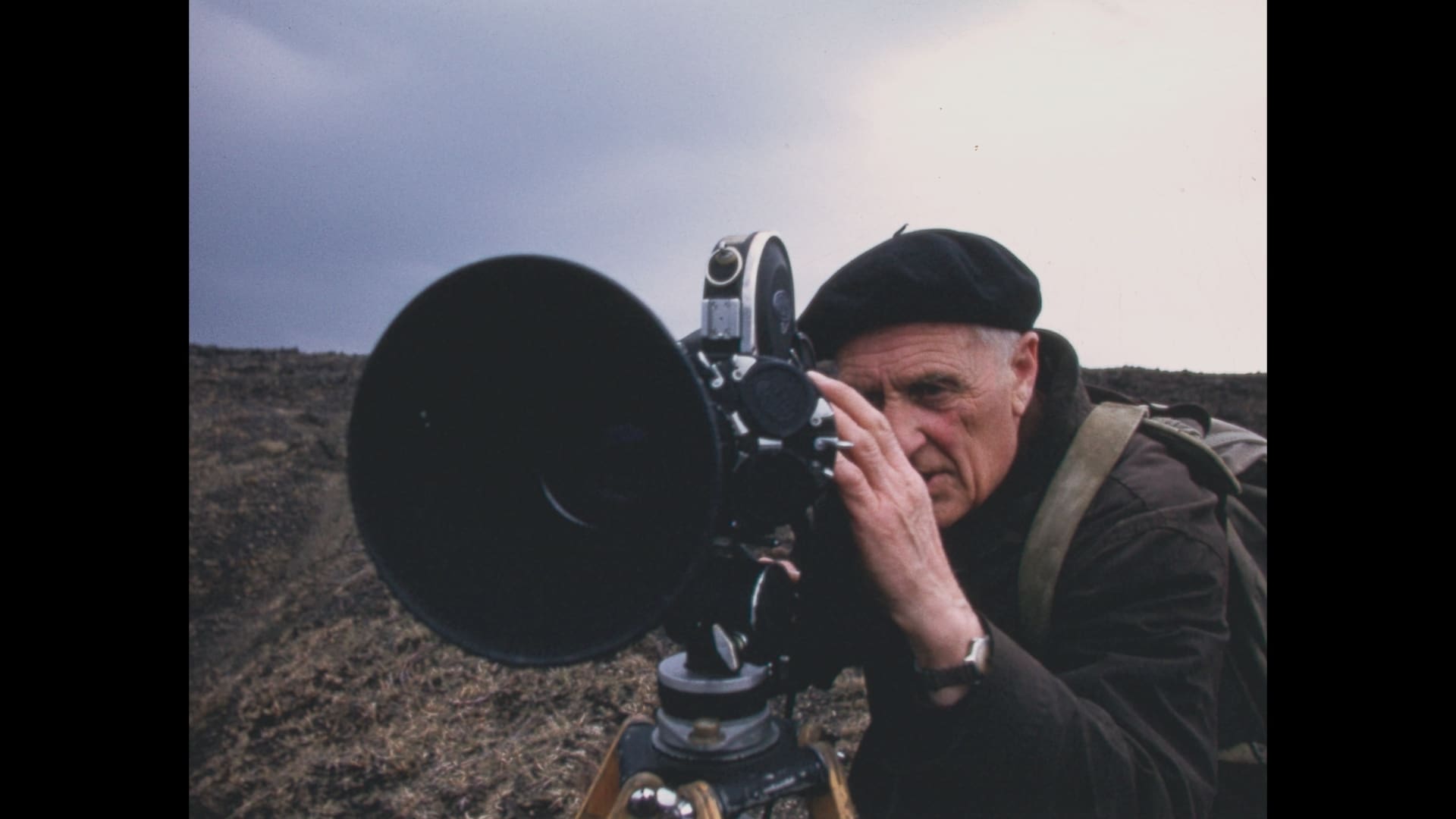
It was an absolute dream to have video in a fishing movie because the fish don't necessarily bite when you want them to. You can basically just run for an hour and wait, but of course, we had to keep an eye on the film and the cameras we were using for this, These were usually these wound-up Bolex cameras that only took 30 seconds. You can see it a little bit in Ósvaldur [Knudsen]'s films. Osvald was always counting because you had to stop well before 30, otherwise the shot was just ruined, you can imagine…
Good morning Yeah, did you know Oswald?
JH: Yeah, Ósvaldur was a decent guy, but he was terribly pushy. But I knew Villa [Vilhjálmur Knudsen] naturally, and he was no match for that guy. Not as a filmmaker. The guy was just so enthusiastic and hardworking, he had the connections and he was, of course, a great outdoorsman. He was a great friend of Sigurður Þórarinsson [geologist] his whole life, and that's how I think he actually got into it.
Good morning Did you know Magnus Jóhannsson?
JH: Yeah, he was a hell of a tough business partner, absolutely. You definitely couldn't buy material from him; he just wasn't into that, but he was a great pioneer in bringing [film] equipment to this country. I got to know Magnús well because he was the public address system manager down at the Althingi, and I was there more or less for 10 years.
When I left the TV station, I basically inherited a project from Magnús Bjarnfreðsson [journalist]. I started shooting for Magnús Bjarnfreðsson, but he had made a deal with the Speaker of the Althingi to make a film about the work of the Althingi, and I didn't get out of it until 1982. Then I just had to draw the line and finish the film, otherwise I'd still be there.
I filmed all the parliamentary proceedings and everything around the parliament and the travel related to the Nordic Council. The film is in the Film Archive. I think it's just called Althingi. This was a 25-minute film from when the Althingi operated in two chambers. Naturally, it features all the MPs of the period over ten years, so there are quite a lot of people in it. I suppose it must have started in 1974 or ’75 and run until ’82.
Technological Development
JH: I think if there was one thing, it would be the computerization—that was the biggest development in filmmaking here in the country. It's really all of that physical stuff that changed when we moved away from film. The cost, the space, the hassle of moving it all, I remember at one point I had a 6-disc Steenbeck editing table at my place in Ásgarður, upstairs on the second floor. It was just a huge ordeal to move that. And then I never used it, of course, because you always plan on working from home but then you don't.
Financially as well, it's of course much cheaper to go out with a video camera and shoot footage and be able to go straight to editing, rather than having to wait for a week and a half to three weeks to see if it was properly exposed. This was really difficult in Land and Sons. We didn't see anything, we didn't get any rushes back until we had been shooting for a week and a half.
But always in good contact with the lab. We used Rank Film Laboratories in London [later Deluxe, London], and they really knew their craft; if there was anything wrong, I was told. They check the film naturally when it comes out of the processor, and they always let you know if it was scratched. If there was a scratch, they'd call Svarfaðardalur, which wasn't easy at all. We never got that kind of service from the Scandinavians. It was very strange. The British just took it completely seriously, and then we'd go to the movie theater in Dalvík to check it out, which was kind of fun.
Both The Outlaw and Land og synir were shot on „shortends edge“ leftover film from production companies that could be, say, 100 feet on a single reel and 400, 350—it made a whole half in price difference, and saved a ton. In proportion to the total cost, the film wasn't a big deal, but now that's just gone. It was just a one-time thing in Land and Sons We got a film that was bad and it was scratched, which was basically incomprehensible, but it was in a scene where we could „frame out“ the scratch so that most of the image was okay. This was the scene at the hospital there in Hjalteyri.
And so in The Outlaw, we still had the generator, we were of course shooting up there in Hítardal in the dead of winter in the snow and bad weather and everything, and then we had to light an outdoor scene after one of the murders when the people of the farm finally get out. It ran out into the darkness that we were lighting, and I think the power cable was 150 meters to the HMI lights. That meant the lights started to sway; it was just considered a ruined scene, so I went and talked to Dimbleby, who was our guy there, and he came up with a hell of a solution: „Just put a snowfall over it.“ Creating snow was no problem. That totally saved the day so we could use it.
Good morning Now, there's naturally a large number of people who work on a production like this. Where do you house all these people?
JH: We spent a lot of time in schools. We actually have most of the people with us when we're on the Westfjords. There we got a place in a school, and the whole team slept in one open hall. Otherwise, they would have had to go to Ísafjörður if they hadn't been okay with that, and Gústi, he was just in a tent up on the mountain.
Good morning You talk about goodwill, for example in the Faroe Islands in the first Life film. Was it the same in these schools, that you were allowed to be there for free?
JH: Yeah, of course, there was nobody in the schools in the summer when we were there. So when we were filming in Hítardal in the winter, we had all the people at the hotel in Borgarnes, so it was a huge operation. So, of course, there were always some money crises, and I remember buying a whale, freshly caught, at Brjánslækur, so we ate whale meat a few times. We had a cook and a cafeteria; there was no other way. There were almost 100 people there at the most.
So we had British stuntmen in The Outlaw who made the weapons for us and, you could say, directed the battle scenes, because we don't know how to handle swords and axes, and it turned out very well. They saw the meat, which basically looks like beef before the whale is cooked. They were really looking forward to eating this fine meat and ate with great appetite. But when they were told it was whale, two of them threw up. So, a lot of funny things happened there.
What stands out?
Good morning This is now quite a pile of pictures that you have been producing.
JH: I counted 120 titles. By that, I mean that when you make a series, I count all the episodes.
Good morning Is there any one project that stands out, do you think? Or is everything just fun and special in its own time?
JH: In hindsight, I would now think that it was Geology. You get a lot more out of making a documentary or an educational film than you do from being in these movies, because a movie is naturally nothing more than just an extension of the theater. But the content, being able to educate someone, that matters more to me than entertaining.
I never had any dreams of getting into filmmaking, it just sort of happened on its own. And I didn't want to direct at all, least of all that, but then naturally with the documentaries, you also have to direct. You don't really notice it, but of course you're a director to a certain extent because you're just filming out in nature. You have to decide what to shoot, but what I'm saying is that you maybe get more satisfaction from making these documentaries, I feel, in a private way.
Jón Hermannsson died in August 2025, three years after this conversation took place.