
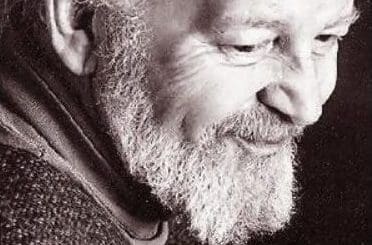
At the IceDocs film festival, held in Akranes this summer, four films by filmmaker Thorgeir Thorgeirsson were screened. The films were scanned by the National Film Archive of Iceland in the highest possible quality. Hallur Örn Árnason initiated this part of the festival and had Gunnar Tómas Kristófersson compile a biography of Þorgeir, which he presented at the premiere. Gunnar Tómas has kindly given the archive permission to publish it here.
Filmmaker Thorgeir Thorgeirson was unique; he returned home from studying filmmaking in Czechoslovakia in 1962 to a very difficult reality. Film-making in Iceland had little tradition and no real professionals. There was little equipment in the country, few films had been produced, and after a few prosperous years between 1944 and 1957, a freeze had once again set in on the nation's film production. Thorgeir essentially had to reinvent the wheel; he had studied filmmaking, which was rare, and he wanted to work in the production of art films in Iceland, which was even rarer. It was considered madness to try to produce films for the masses in Iceland, let alone to embark on making experimental documentaries. But Thorgeir did just that. And the result was something unique.
Thorgeir was active in the production of television content, films, and other material both in Iceland and abroad for almost a decade. From 1963 to 1972, this was Thorgeir's main occupation and, as far as can be determined, he was the first Icelandic person to make filmmaking his primary profession. Others worked other jobs alongside their own filmmaking.
Thorgeir was born in 1933. He grew up in Siglufjörður, Kópavogur, and East Iceland before moving to Reykjavík and graduating from Menntaskólinn í Reykjavík in 1953. He then went to study in Vienna, where he studied psychology and art history. A short stay in Spain was followed by a course in television directing in Paris from 1955-1956 and film directing at the Academy of Arts in Prague from 1959-1962.
After his studies at the Academy of Arts in Prague and after seeing a lot of the world's leading directors, Thorgeir returned home inspired. It quickly becomes clear when viewing his films that Thorgeir thought about cinema differently than his predecessors in Iceland; he contemplates perspective, lighting, composition, pacing, and meaning, and this is clearly evident in his films. Thorgeir's first project was Hot Water Adventure (1963), a film he made for the Reykjavík Geothermal Power Company that was both a promotion for the system's operation and an adventure film about children who get lost and have to find their way home. In short, the film is a milestone in Icelandic filmmaking, as its confident imagery, beautiful cinematography, and a mysterious and adventurous structure of shots and scenes had not been seen in a comparable way before. However, Thorgeir did not have full artistic freedom in making his films, as he had to seek funding from institutions and companies. There was no Film Fund, and government officials looked almost exclusively at the promotional value of films for the country when considering funding them from the state budget. Rowing, To Build and other pictures of Thorgeir, outside Man and factory, He made them for a third party and therefore did not have artistic freedom in their creation. Of course, this is visible in the images, but on the other hand, one can also see the handiwork of an artist guided by something more than just a material content.
Thorgeir didn't want to just focus on the ”best" version of what he was supposed to film; he wanted realism and to try to capture the true texture of life in his films, whether it served the subject (and the money powers behind it) or not. He was of a generation that saw the world in a harsh light and wanted to dissect, criticize, and examine what was there. Not everyone appreciated this artistic vision of Thorгейr's, and after he made Row He considered making films in Iceland a lost cause after the first film in a planned short film series about the Icelandic fishing industry. The film shows the everyday life of a fisherman. It was filmed on board an old boat, one crew member was a former prisoner, and nothing in the film romanticizes the sailor's life. The film is realistic and often shows the harsh yet human life on board. At the same time, it is lyrical and ambiguous, giving a sense of the endlessness of the tossing on board.
Following the film's premiere, the ministry reacted poorly, as it wanted to see a dress-up version of the fishing industry, the fanciest ships, freshly painted and with only honorary citizens on board. Thorgeir could in no way accept this vision, as the fishing industry is about more than just polished decks and frills. The production of more films in the series was halted, and as a result, Thorgeir put filmmaking on hold and turned to writing, as there is little for a man with opinions in filmmaking to do when he is not allowed to express them.
Thorgeir's place in the country's film history is remarkable; he is something of a lone wolf as an experimental documentary filmmaker. He wanted to do more—really anything—to change and develop the country's film culture. He even founded a movie theater—Litla Bíó—which was meant to show different and more artistic films than the other 12 movie theaters in the city were showing, then he wanted to establish a film archive, but nothing of the sort existed in the country, and the film heritage was at risk of being lost, with the government having no plans to save it. Both ideas were short-lived, as there are few precedents for such ventures surviving without government involvement, which had no interest in them. Thus, Thorgeir not only thought about the problems, but he analyzed them and wanted to do something about them.
The film that Thorgeir is best known for is Man and Factory which he was able to produce with his own funds and therefore on his own terms. The film premiered at the Edinburgh Film Festival and won awards in Locarno, as well as being shown quite widely. In the film, he plays with Eisenstein-inspired montage editing, where meaning is tried to be created by juxtaposing two different things, as well as working with a poetic realism that creates a strange and fascinating world out of a simple sardine factory. In the film, Thorgeir explores the relationship between man and the power of industry, the mechanization of life, and the ancient within this great human creation. The film, likely his most famous work, is a rare example of an experimental Icelandic documentary. In a country where movies were few and producing an equally expensive contribution to art as the film was a major achievement, few had the will and courage to tackle the medium, let alone in an experimental way. This better describes Thorgeir's audacity than much else, not to mention his artistic vision and the courage to say in an Icelandic context what no one had articulated before. But the language of the art film is based on a vocabulary that, for a long time, did not exist in the Icelandic context. Thorgeir was an artistically gifted poet who received little support and very few opportunities, but the output of his work is diverse, and it is important that he be remembered in its entirety.
To Build made by Thorgeir for the City of Kópavogur on its 10th anniversary in 1967. The film is about the city's development, during a building boom when houses were being erected in great numbers. Thorgeir does this justice in the film and, with what could well be interpreted as a touch of irony, he juxtaposes a city council meeting where development issues were discussed with kids building a cabin—there must be some criticism of the state of affairs in that. But what that criticism is, is perhaps not obvious. Thorgeir's films are full of such interpretive details and meanings that perhaps escaped the money men pulling the strings, but it's fun to dig into.
Thorgeir Thorgeirsson deserves all the credit for his filmmaking and the courage to invest in it in a country that had no active filmmaking, film industry, or film traditions to build upon.
Gunnar Tómas