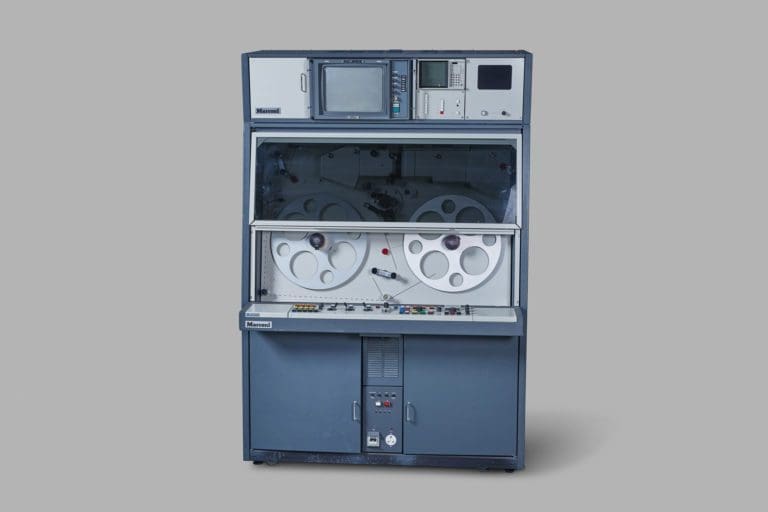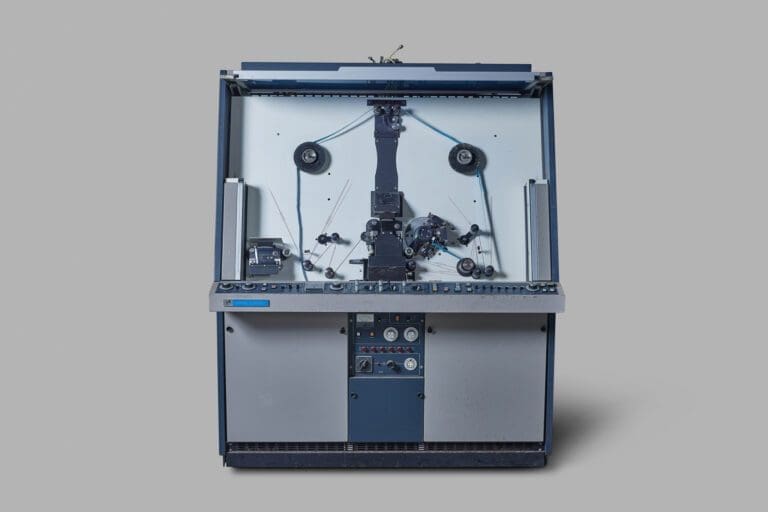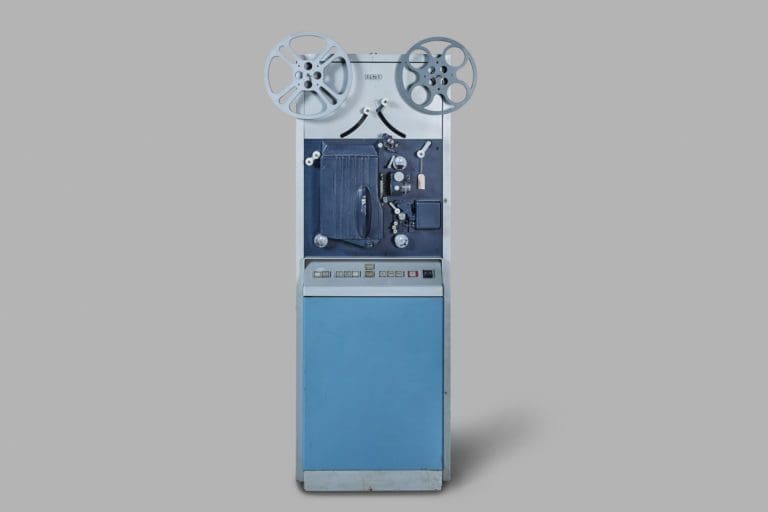
Television scanner and image control device
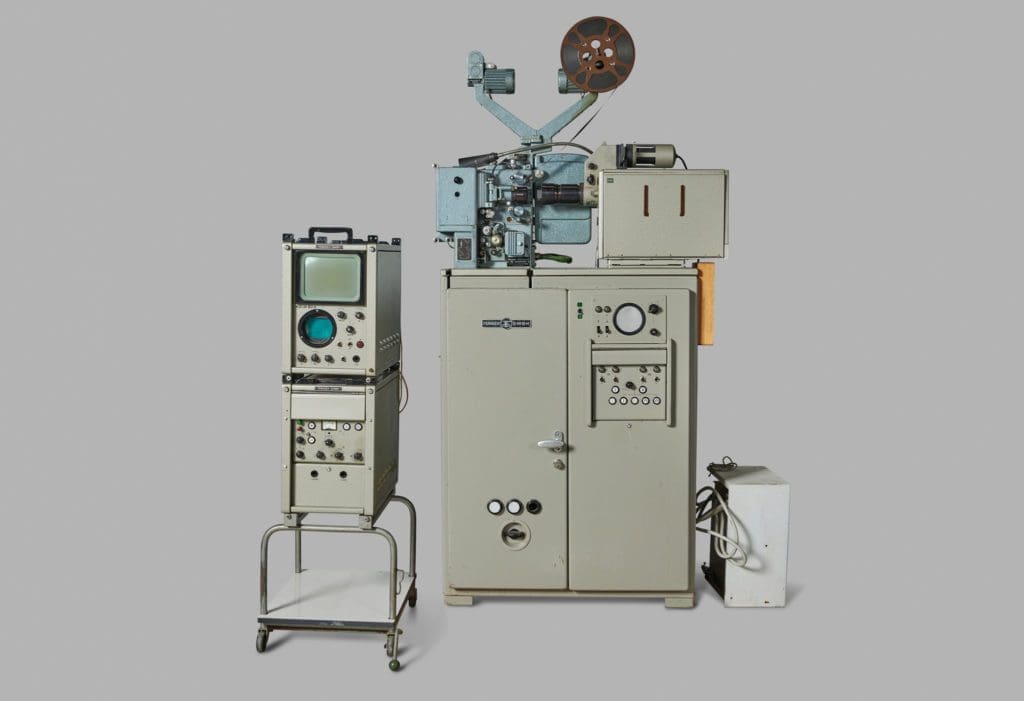
Fernseh G.M.B.H. scanner for 16 mm (black and white) film. The scanner consists of a 16 mm film projector combined with a 16 mm sound track (perf-band) tape player. The scanner is accompanied by an image control unit of the Kw 75 E model, which adjusted the image's texture—i.e., brightness, etc.—as it was being displayed on the scanner. The scanner converted the image on the film into an analog television signal, which was sent to the transmission equipment. The scanner is one of two of this model that the Television station imported at its founding in 1966. The scanners were considered the best available at the time, and the quality of the Television station's broadcasts was on par with those of the world's leading broadcasters. The scanner played 16 mm film and 16 mm sound track, which was the standard for television production. 16 mm films were more convenient and cheaper to work with than 35 mm films, which were more common for making feature films. At that time, it was a relatively new technology to be able to play audio and video simultaneously, but separately; previously, a technique was used where the soundtrack was recorded directly onto the film itself. For a broadcast, a technician had to sit at the equipment and adjust the signal so that the picture was correct for the broadcast. The first technicians working at the television station had to attend a course in Denmark to learn this technology, but the equipment required a great deal of constant maintenance. If a technical failure occurred during a broadcast, a sign reading the famous "Sorry for the interruption" would be put up.
- Catalogue no.
- Ss 07-1, 3 and Ss 07-1, 4
- Category
- Scanners